If you’ve ever reached the end of the month wondering where your paycheck went, learning how to do a zero based budget is one of the fastest ways to fix that. It’s not about restriction. It’s about giving every dollar a job before the month even starts.
What Is a Zero-Based Budget?
A zero-based budget is a method where every dollar you earn is allocated to a specific purpose rather than remaining unallocated in your checking account, and your income less your spending, savings, and debt payments equals zero.
That sounds simple, but people trip over the mechanics at first. “Zero” doesn’t mean you spend everything—it means nothing goes unaccounted for. Money you put into savings or an emergency fund still counts as assigned, same as rent or groceries. That’s the key difference from a plain balanced budget, where income just has to equal expenses—here, every dollar needs a specific job, not just a matching total.
What does “every dollar has a job” mean in budgeting?
Each dollar gets assigned somewhere—a bill, savings, debt, or fun money—so nothing’s left unplanned.
This phrase gets used a lot because it’s the clearest way to explain the philosophy behind zero-based budgeting. Instead of tracking spending after the fact, you’re deciding in advance where the money goes. It’s a mindset shift as much as a math exercise, and it tends to be one of the simple budgeting tips for beginners that actually sticks, because it removes the guesswork from spending decisions.
How to Do a Zero Based Budget In 5 Steps
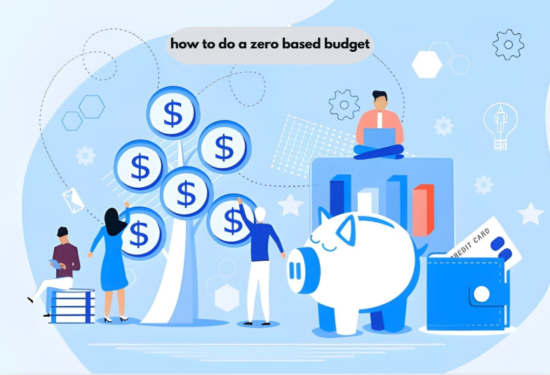
To create a zero-based budget, figure out your entire monthly income, make a list of all your costs and savings objectives, deduct your expenses from your income until you reach zero, monitor your spending during the month, and make adjustments the next month based on real results.
What is the first step in creating a zero-based budget?
The first step is calculating your total monthly take-home income from every source, since that number sets the ceiling for everything else in your budget.
If your income varies month to month, use your lowest realistic earning month as your baseline rather than an average. This keeps the budget honest and prevents you from assigning money you might not actually have.
How do you list expenses in a zero-based budget?
Start with fixed costs like rent and insurance, then variable costs like groceries and gas, then savings and debt payments last.
What do you do if your expenses are higher than your income?
You cut variable spending categories first, such as dining out or subscriptions, before touching fixed expenses, and if the gap is still too large, you look at increasing income or renegotiating fixed costs.
A traditional budget might not surface this problem until you’re overdrawn—zero-based budgeting shows the shortfall on paper first.
The five steps, laid out simply, look like this.
- Calculate your take-home income: Add up everything you bring in each month.
- List your expenses: Fixed costs first, then variable costs, then savings and debt.
- Subtract until you hit zero: Until there are no more dollars, each dollar is assigned a category.
- Track your spending: Log purchases as you go so overspending doesn’t sneak up on you.
- Adjust monthly: Revisit your numbers and rebuild the budget for the next cycle.
Zero-Based Budget vs. 50/30/20 Rule: Which Is Better?
Neither one wins outright. A zero-based budget gives you more control since every dollar gets assigned individually, while the 50/30/20 rule is quicker to set up because it works off broad percentages instead of line-by-line planning.
What is the 50 30 20 budget rule?
The 50/30/20 rule divides your after-tax income into three categories: 20% for debt and savings, 30% for wants, and 50% for needs. This eliminates the need to keep track of each area separately.
This approach comes from Senator Elizabeth Warren’s book All Your Worth, and it’s stuck around because it’s so easy to remember. It’s a solid fit if you want structure without the detailed tracking a zero-based budget demands.
Many readers comparing budgeting methods realize that while the what is the 50 30 20 budget rule offers a quick framework, a zero-based budget provides the granular control needed for tighter margins.
Zero-Based Budget vs. 50/30/20 Rule at a Glance
| Feature | Zero-Based Budget | 50/30/20 Rule |
| Setup time | Longer, requires listing every category | Faster, just three broad buckets |
| Best for | Irregular income, debt payoff, tight margins | Steady income, budgeting beginners who want simplicity |
| Tracking effort | High, ongoing | Low to moderate |
| Flexibility | Low, every dollar is pre-assigned | Higher, wants category has built-in flexibility |
| Common use case | Paying off debt fast or fixing overspending | General money management without deep tracking |
Best Tools and Methods to Track a Zero-Based Budget
You don’t need an app to do a zero-based budget successfully. A basic spreadsheet or even a notebook works fine, since the method itself matters far more than the tool used to track it.
Do you need an app to do a zero-based budget?
No, an app is not required, though budgeting apps like YNAB or EveryDollar are built specifically around zero-based budgeting principles and can automate some of the manual math.
If you’re just starting out, a free spreadsheet template is often the better move. Apps add convenience, but they also add a subscription cost, which somewhat defeats the purpose if you’re trying to tighten your budget in the first place. For quick, no-cost reminders between budgeting sessions, the betterthiscosmos posts by betterthisworld are worth a browse.
What is the cash envelope budgeting system?
The cash envelope budgeting system denotes taking out money and dividing it into labeled envelopes for variable categories like grocery or amusement. Once an envelope’s empty, spending in that category stops for the month.
It pairs naturally with zero-based budgeting since both rely on giving every category a hard limit. There’s research behind it too—people tend to spend less with physical cash than cards, probably because handing over bills feels more like a real loss than a swipe does. That’s likely why the envelope system has stuck around even in a mostly cashless world. Once you’ve seen the cash envelope budgeting system explainedin detail, it’s easy to see why people pair it with a zero-based budget rather than using it alone.
For example, if you allocate $400 a month to groceries, you place four $100 bills into an envelope labeled ‘Groceries.’ Every time you go to the store, you pay directly from that envelope. Spending on groceries ceases until the next month when the envelope is empty.
Plenty of budgeting blogs and communities share quick envelope-system tips worth browsing for extra reinforcement. For casual, everyday money tips like this, money betterthisworld is worth bookmarking.
Common Zero-Based Budgeting Mistakes and How to Fix Them

Why does my zero-based budget never balance to zero?
Your budget likely doesn’t balance because you’re forgetting irregular expenses, such as annual subscriptions or car maintenance, that don’t happen every single month.
The fix is building a “sinking fund” category into your budget for irregular costs, where you set aside a smaller amount every month so the expense doesn’t blow up your budget when it actually hits.
What happens if I overspend in one category?
If you overspend in one category, you pull the difference from another category with money left over, since the goal is keeping the overall budget at zero rather than never going over in any single line item.
This is one of the more forgiving parts of the method once people understand it. Overspending on groceries one week doesn’t mean the whole budget failed. It simply means that in order to cover it, another category must flex.
How often should I redo my zero-based budget?
You should rebuild your zero-based budget every single month, since income and expenses shift month to month and a budget built in January won’t accurately reflect your finances in April.
Frequently Asked Questions
How long does it take to build a zero-based budget?
Most beginners can build their first zero-based budget in about 30 to 60 minutes, though it gets faster in following months once the categories are already set up.
Is zero-based budgeting good for irregular income?
Yes—it’s especially useful for irregular income, since it forces you to plan around your lowest expected earnings instead of assuming a steady paycheck.
Can couples use a zero-based budget together?
Yes—combine your incomes and expenses into one plan. The best results come from both parties reviewing and agreeing on the categories each month.
What’s the biggest benefit of zero-based budgeting?
Awareness, mostly. It forces you to see where every dollar’s going instead of finding out after the overspending’s already happened.
Final Thoughts
Learning how to do a zero based budget isn’t complicated, but it does take a bit more effort upfront than other methods. The payoff is that you stop guessing and start knowing exactly where your money stands, which matters a lot more when income is tight or debt is piling up. It won’t feel natural the first month, and that’s fine. It gets easier once the categories are already built and you’re just adjusting numbers instead of starting from scratch.
If you want to try it, don’t wait for a “clean” month to start. Pull out your next paycheck, list your income, and assign every dollar a job before you spend a single one of them. That’s really the whole method.