How to grow your money safely comes down to doing seven things in the right order. Start by keeping emergency money in a federally insured account, paying down high-interest debt, and taking whatever retirement match your employer offers. After that, add Treasury securities and certificates of deposit. Each step is either backed by the government or pays a return you can calculate in advance, and stocks come last. Inflation is the fact that changes the answer. Consumer prices rose 3.4% in the 12 months ending August 2026, according to the Bureau of Labor Statistics. Cash that earns less than that…

-
-
Here is how to start investing with little money: open a $0-minimum brokerage account or IRA, then buy fractional shares of a low-cost index fund starting at $1. Build a small emergency fund first, then automate a fixed monthly amount and keep annual fund fees close to 0.05%. Key Takeaways What Is Investing With Little Money? Investing with little money means putting small, regular amounts, often $1 to $100 at a time, into assets such as index funds, fractional shares, or Treasury securities that can grow over time. The money BetterThisWorld approach treats the monthly habit as the skill that…
-
Low-income buyers can realistically save a house down payment by targeting 3%–3.5% loan minimums, not the mythical 20% rule. Down payment assistance grants can cut that savings timeline by years. Key Takeaways Knowing how to save for a house down payment starts with the right target number, not a vague goal. Most low-income buyers overestimate what a lender requires and underestimate what assistance programs offer. A household earning under the local median income can still reach closing day within a few years by combining a realistic loan type, an automated savings system, and one of thousands of available grant programs.…
-
Researching any stock before buying it means checking its financial filings, valuation against peers, insider activity, and named risk factors—the same core process regardless of what a search term promises. “Stocks BetterThisWorld” itself is a phrase used across several content sites, not a licensed strategy, fund, or index. Key Takeaways People search “stocks BetterThisWorld” expecting a defined investing framework or platform. It doesn’t exist as one. The phrase currently labels a group of blog-style articles that describe stock research and ESG investing in general terms, sometimes under the domain betterthisworld.com. This guide replaces that vague framing with an actual, checkable…
-
Most financial planners suggest setting aside three to six months’ worth of living expenses, which should include moving charges, a security deposit, and at least the first month’s rent., before moving out on your own. For most renters in the U.S., that lands somewhere between $3,000 and $10,000 depending on your city. How Much Money Should I Save Before Moving Out? Figuring out how much money should i save before moving out isn’t really about hitting one magic number. It’s about covering three separate buckets: the upfront move-in costs, a cash cushion for the first few unpredictable months, and an…
-
How to automate your savings easily starts with setting up recurring, hands-off transfers from checking to savings so money moves before you’re tempted to spend it. It typically involves scheduled bank transfers, round-up apps, or employer direct deposit splits, and it removes willpower from the equation entirely. What Does It Mean to Automate Your Savings? What is automated savings? Automated savings is any system that moves money into a savings account on a schedule without you manually initiating the transfer each time. Instead of remembering to move $200 into savings on payday, you set a rule once, and the transfer…
-
If you’ve ever reached the end of the month wondering where your paycheck went, learning how to do a zero based budget is one of the fastest ways to fix that. It’s not about restriction. It’s about giving every dollar a job before the month even starts. What Is a Zero-Based Budget? A zero-based budget is a method where every dollar you earn is allocated to a specific purpose rather than remaining unallocated in your checking account, and your income less your spending, savings, and debt payments equals zero. That sounds simple, but people trip over the mechanics at first.…
-
Impulse buying is the act of purchasing something without planning it in advance, usually driven by emotion, boredom, or a marketing trigger rather than actual need. Learning how to stop impulse buying and save money starts with recognizing these triggers and replacing them with small, repeatable habits that interrupt the urge to spend. The Psychology Behind Unplanned Spending Impulse buying almost never comes from a logical place. It’s your emotions doing the shopping, not your brain. Stress, boredom, or even a good mood can push you toward spending just to keep that feeling going. Retailers are aware of this, which…
-
You’ve read the generic advice already. Skip the latte. Make a budget. Save more. None of it explains why some people build real wealth on an average salary while others stay stuck despite earning more. The difference comes down to smart money habits to build wealth and which ones you keep doing after the motivation fades. What “Smart Money Habits to Build Wealth” Actually Means Smart money habits to build wealth are the repeated, low-effort financial behaviors that compound over years. Think: They work because they don’t rely on motivation. Once set up, they run quietly in the background, no…
-
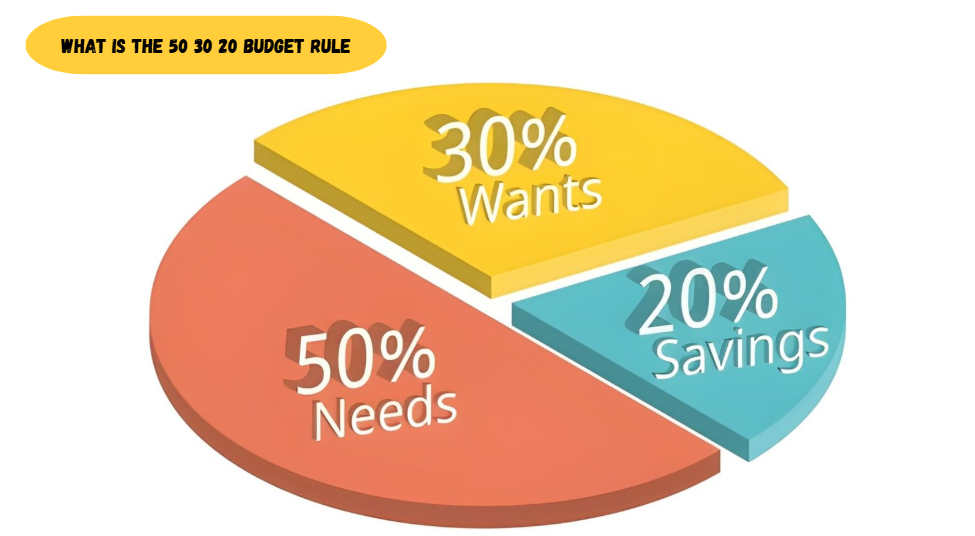
The 50 30 20 budget rule is a money management method that splits your after-tax income into three buckets, with 50% going toward needs, 30% toward wants, and 20% toward savings or debt payoff, making it one of the simplest budgeting frameworks for people just starting out. I started using this system back in 2022 after my own spreadsheet budget fell apart for the third time in a row. I was tracking every latte and every gas fill-up, and honestly, it burned me out within two weeks. A friend sent me a link to money betterthisworld, and one article on…