
What is an index fund and how does it work? An index fund is a single investment that buys every company in a market index, such as the S&P 500, and holds them in the same proportions, so your return matches that market minus a very small yearly fee.
Key Takeaways
- An index fund copies a published list of investments instead of paying a manager to pick winners.
- One share of a broad index fund spreads your money across hundreds or thousands of companies.
- Fees are the biggest factor you control, and the cheapest broad funds cost $3 or less a year per $10,000 invested.
- Index funds rise and fall with the market, so they suit money you will not need for at least five years.
- Most major U.S. brokers let you start with no minimum and automate monthly purchases.
What Is an Index Fund and How Does It Work?
An index fund is a mutual fund or exchange-traded fund (ETF) built to match the performance of a specific market index by owning the same securities that index contains.
An index is only a list with rules. The S&P 500 lists roughly 500 of the largest U.S. companies, and a total market index lists nearly every publicly traded U.S. company.
How Does an Index Fund Work in 5 Steps?
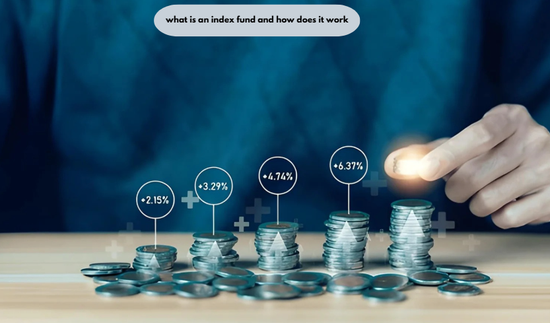
An index fund pools money from many investors, uses it to buy every holding in its target index, and passes the gains, losses, and dividends back to you in proportion to your shares.
The mechanics follow a simple loop:
- You buy shares. Your dollars join a pool with other investors’ dollars.
- The fund buys the index. If Apple makes up 7% of the index, about 7% of the pool goes into Apple.
- The fund collects dividends. Cash paid by the companies is passed to you or reinvested automatically.
- The fund adjusts when the index changes. When a company is added or removed, the fund buys or sells to match.
- A small fee is deducted. The expense ratio comes out of the fund’s assets daily, so you never receive a bill.
Because no one is researching or trading in search of winners, running costs stay low. You own a tiny slice of each business on the list, and your return is the market’s return minus that fee.
This approach is now the mainstream choice. Index mutual funds and index ETFs held 52% of long-term fund assets at the end of 2025, up from 19% in 2010, according to the Investment Company Institute’s 2026 report Trends in the Expenses and Fees of Funds, 2025. That scale is what pushes fees toward zero, so a beginner today pays less than large institutions paid a generation ago.
Are Index Funds Better Than Actively Managed Funds?
For most long-term investors, yes, because low fees give index funds a head start that most professional managers fail to overcome.
An active fund has to beat the market by more than its own fee just to tie. In 2025, 79% of actively managed large-cap U.S. funds trailed the S&P 500, according to S&P Dow Jones Indices’ SPIVA U.S. Scorecard for year-end 2025. Picking a manager from that group left you roughly a one-in-five chance of coming out ahead for the year, and you had no way to know in advance which fifth would win.
What a fee gap costs over 30 years
A higher fee compounds against you every year you stay invested. Take $300 a month for 30 years, a total of $108,000 in deposits, and assume a 7% yearly return before fees. That return is an assumption for the math, not a forecast.
- At a 0.03% fee, the account ends near $364,000.
- At a 0.40% fee, it ends near $338,000.
- At a 1.00% fee, it ends near $301,000.
The 1.00% fund costs about $62,000 more than the 0.03% fund, which is more than half of everything you deposited. Even the 0.40% fund gives up about $25,000.
How Much Does an Index Fund Cost?
A broad U.S. index fund from a major provider costs between $0 and $3 a year for every $10,000 invested. The table compares four well-known funds with two industry averages, and the yearly cost column is calculated from each expense ratio.
| Fund or category | Type | Expense ratio | Yearly cost on $10,000 | Source |
| Fidelity ZERO Total Market (FZROX) | Mutual fund | 0.00% | $0.00 | ChooseFI |
| Fidelity 500 Index (FXAIX) | Mutual fund | 0.015% | $1.50 | The White Coat Investor |
| Schwab S&P 500 Index (SWPPX) | Mutual fund | 0.02% | $2.00 | The White Coat Investor |
| Vanguard S&P 500 ETF (VOO) | ETF | 0.03% | $3.00 | ChooseFI |
| Average index equity ETF, 2025 | Category average | 0.14% | $14.00 | Investment Company Institute |
| Average equity mutual fund, 2025 | Category average | 0.40% | $40.00 | Investment Company Institute |
The two averages measure something different from the four single funds. They are weighted across every fund in the category, including narrow and specialty funds, which is why they sit well above the cheapest broad options.
Funds that track the same index also deliver nearly the same result. The White Coat Investor’s May 2026 comparison found Fidelity’s and Schwab’s S&P 500 funds nearly tied over ten years, at about 15.2% per year. A gap of 0.03 percentage points means the fund you pick matters far less than the date you start, so choose the low-cost option at the broker you already use.
A common mistake: buying three or four different S&P 500 funds to “diversify.” They hold the same 500 companies, so the extra funds add paperwork without adding protection. One broad fund does the job.
How Do You Start Investing in an Index Fund?
You start by opening a brokerage or retirement account, choosing one broad low-cost fund, and setting up automatic monthly purchases.
Get your cash reserves in order first. Here is sinking funds vs emergency funds explained in one line: an emergency fund covers surprises such as a job loss, and a sinking fund covers a planned cost such as a car replacement or a family event. Both belong in a savings account, not in the market.
Then follow this order:
- Pay off credit card balances, since their interest rates exceed any realistic market return.
- Capture any employer 401(k) match, and check whether the plan offers an index fund.
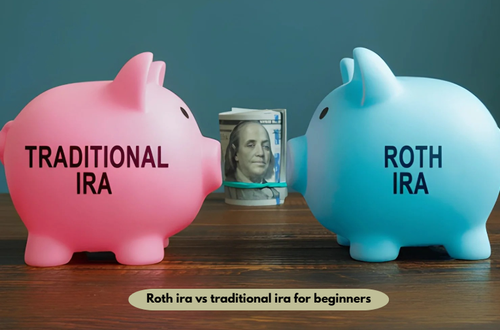
- Open a Roth or traditional IRA, or a taxable brokerage account.
- Read the fund’s fact sheet for the key info: index tracked, expense ratio, and minimum purchase.
- Automate a fixed amount each month and leave it alone during downturns.
For readers asking how to grow your money safely, “safely” here means wide diversification and a long holding period, not a guarantee. Broad baskets of stocks have dropped by a third or more in bad years and recovered only with time. Searches such as money betterthisworld show how many beginners look for plain-language guidance before buying a first fund, and the steps above are the full process.
When Is an Index Fund the Wrong Choice?
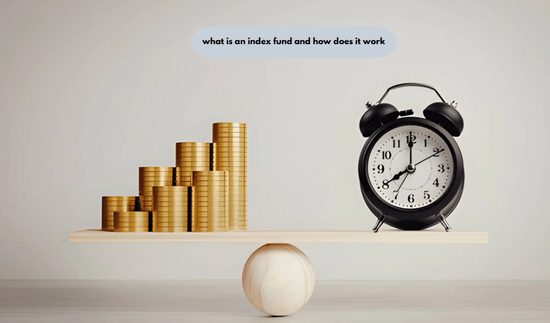
An index fund is the wrong tool for money you need within about five years. A down payment due in 18 months belongs in a high-yield savings account or Treasury bills, because a market drop right before the purchase date leaves no time to recover. The same applies if you carry high-interest debt: paying off a 24% card balance beats any fund.
Frequently Asked Questions
Can you lose money in an index fund?
Yes, an index fund loses value whenever the market it tracks falls. Losses become permanent only if you sell during the drop, which is why a holding period of five years or more matters.
How much money do you need to start an index fund?
Many index funds at large U.S. brokers have no minimum, so you can begin with as little as $1. Some funds still require a set opening amount, which the fact sheet lists.
Do index funds pay dividends?
Yes, index funds pass along the dividends paid by the companies they hold, usually every quarter. You can take the cash or reinvest it automatically to buy more shares.
What is the difference between an index fund and an ETF?
An ETF is a type of fund that trades all day like a share, while an index mutual fund prices once after the market closes. Both can track the same index at a similar cost.
Are index funds good for beginners?
Yes, index funds suit beginners because one purchase delivers broad diversification at a very low fee. They also remove the need to research individual stocks or time the market.
Conclusion
The short answer to what is an index fund and how does it work: it buys an entire market, holds it, and charges almost nothing for the service. Your results depend on three things you control, which are the fee you pay, the amount you add, and how long you stay invested. Pick one broad fund, automate it, and let time do the work.



One comment on “What Is an Index Fund and How Does It Work? A Beginner’s Guide”