Here is how to start investing with little money: open a $0-minimum brokerage account or IRA, then buy fractional shares of a low-cost index fund starting at $1. Build a small emergency fund first, then automate a fixed monthly amount and keep annual fund fees close to 0.05%.
Key Takeaways
- Fidelity lets investors buy fractional shares of U.S. stocks and ETFs starting at $1, while Charles Schwab’s Stock Slices start at $5 per S&P 500 company.
- The IRS raised the 2026 IRA contribution limit to $7,500, up from $7,000 in 2025.
- Index equity mutual funds charged an average expense ratio of 0.05% in 2025, compared with 0.64% for actively managed equity mutual funds, according to the Investment Company Institute.
- Investing $50 a month for 30 years at a hypothetical 6% annual return grows to about $50,200 from $18,000 in deposits.
- Only 28% of adults in households earning under $50,000 own stock, compared with 87% in households earning $100,000 or more, according to Gallup.
What Is Investing With Little Money?
Investing with little money means putting small, regular amounts, often $1 to $100 at a time, into assets such as index funds, fractional shares, or Treasury securities that can grow over time.
The money BetterThisWorld approach treats the monthly habit as the skill that matters, because account minimums are no longer the main barrier. Income still shapes who invests: Gallup’s 2025 stock ownership data shows 62% of Americans own stock overall, but only 28% of adults in households earning less than $50,000 do.
information by BetterThisWorld on investing, like its BetterThisWorld business coverage, draws from official sources such as the IRS, the Federal Reserve, and the Investment Company Institute.
How Much Money Do You Need to Start Investing?

You need as little as $1 to start investing at some major U.S. brokerages. Most large firms now charge $0 to open a standard account and $0 commissions on online U.S. stock and ETF trades.
Fidelity’s fractional shares page states that investors can buy slices of U.S. stocks and ETFs starting at $1, with no account fees to open a retail brokerage account. Bankrate’s Charles Schwab review lists a $0 minimum balance, $0 stock trades, and fractional shares starting at $5 through Stock Slices.
| Starting option | Minimum to start | What you buy | Key limit |
| Fidelity Stocks by the Slice | $1 | Fractional U.S. stocks and ETFs | More than 7,000 eligible securities |
| Schwab Stock Slices | $5 per stock | Fractional shares of S&P 500 companies | Up to 30 stocks per order; no ETFs |
| TreasuryDirect savings bonds | $25 | Series I or EE savings bonds | Bought directly from the U.S. Treasury |
| TreasuryDirect bills, notes, and bonds | $100 | Marketable Treasury securities | No fee added by TreasuryDirect |
| Roth or traditional IRA | $0 to open at many brokerages | Any eligible investment inside the account | $7,500 total contribution limit for 2026 |
Is your money protected at a brokerage?
Yes, against the failure of the firm, but not against market losses. The Securities Investor Protection Corporation (SIPC) covers up to $500,000 per customer at a member brokerage, including a $250,000 limit for cash, and it does not cover a drop in the value of your investments.
How to Start Investing With Little Money in 7 Steps
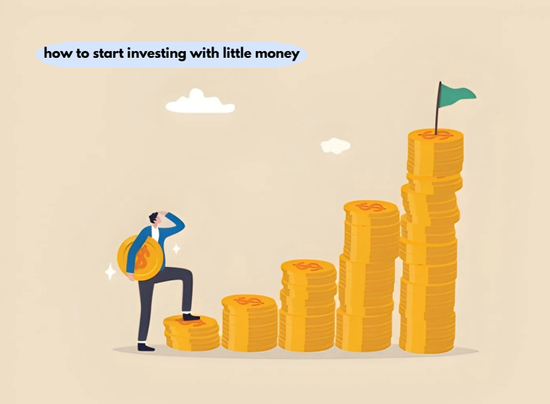
Start by protecting yourself from emergencies, then open a low-cost account and automate small purchases. Following these steps in order is how to start investing for beginners without risking money you need soon.
- Set a starter emergency fund. Keep cash for surprise bills so you never sell investments at a bad time. The Federal Reserve’s Economic Well-Being of U.S. Households in 2025 report found that 63% of adults would cover a $400 emergency expense with cash or its equivalent.
- Pay down high-interest debt. Credit card interest usually costs more than investments reliably earn.
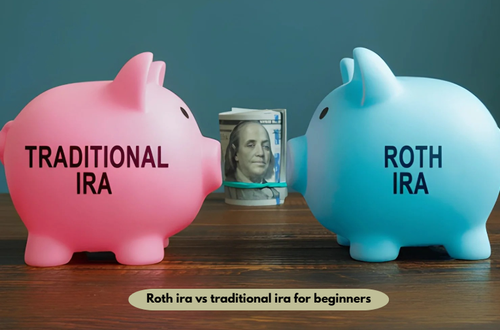
- Pick your account type. If your employer offers a 401(k) match, use it first, then consider a Roth or traditional IRA, while keeping a taxable brokerage account for goals that come before retirement.
- Choose a $0-minimum broker. Look for no account fees, $0 online trades, and fractional shares.
- Buy one broad, low-cost index fund. A total-market or S&P 500 fund spreads your money across hundreds of companies, even when you are investing small amounts.
- Automate a fixed amount. Schedule $25, $50, or $100 to move and invest on the same day each month.
- Raise your amount once a year. Add a few dollars after each raise and check that fees stay low.
The IRS announced in November 2025 that the 401(k) employee limit rose to $24,500 for 2026, separate from the IRA limit.
Where to Invest Money for Beginners?
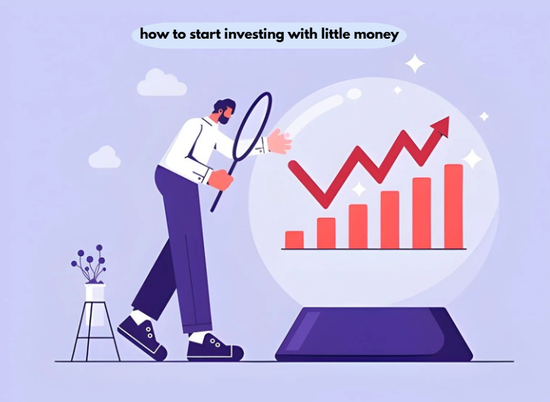
The best place for most beginners is a broad, low-cost index fund held inside a tax-advantaged account. When people ask where to invest money for beginners, fractional shares and Treasury securities are the next answers, each filling a specific gap.
Index funds and ETFs
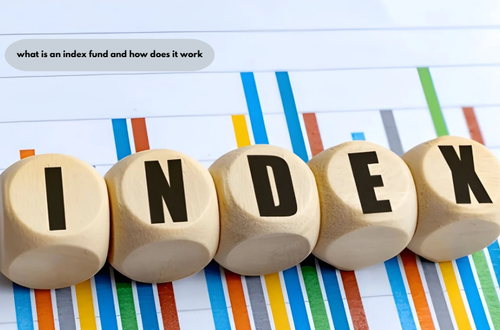
Index funds are the simplest core holding because one purchase buys a whole market segment. The Investment Company Institute’s 2025 fee report shows index equity ETFs averaged a 0.14% expense ratio, and index equity mutual funds averaged 0.05%.
Those are asset-weighted averages, which reflect where investors actually put their money. The simple average across all index equity ETFs offered for sale was higher, at 0.45%, so the fund you pick matters.
Fractional shares of stocks
Fractional shares let you buy part of an expensive stock or ETF by dollar amount instead of share count. Buying a few individual stocks this way concentrates risk, so treat single companies as a side position, not the foundation.
Treasury securities
Treasury securities are loans to the U.S. government and fit money you need within a few years. TreasuryDirect sells savings bonds from $25 and other Treasury securities from $100, and it charges no fee to open or manage an account.
Tax-advantaged retirement accounts
An IRA or 401(k) lets small deposits grow with tax benefits. For 2026, you can put up to $7,500 into IRAs, or $8,600 if you are 50 or older, according to the IRS.
How Much Can Small Investments Grow Over Time?
Small amounts grow meaningfully when you invest them steadily for decades. The math below uses a hypothetical 6% annual return, compounded monthly, which is an illustration and not a forecast of any fund’s results.
| Monthly deposit | Total deposited in 30 years | Value after 30 years at 6% |
| $25 | $9,000 | About $25,100 |
| $50 | $18,000 | About $50,200 |
| $100 | $36,000 | About $100,500 |
In each row, the ending value is nearly triple the deposits. Actual results depend on market returns, the order in which gains and losses arrive, fees, and how consistently you keep investing.
What Is the Biggest Mistake Beginners Make With Small Amounts?
The most costly beginner mistake is ignoring fund fees because the dollar amounts look tiny. A fee is charged as a percentage of your whole balance every year, so it compounds against you just as returns compound for you.
It happens because a 0.64% fee on a $600 balance is under $4 a year, which feels harmless. The damage shows up later, when the balance is large and the fee has been shrinking your growth for decades.
Here is the worked example. Invest $50 a month for 30 years at a hypothetical 6% gross return, and compare the average fee levels the Investment Company Institute reported for 2025.
| Fund type (2025 average expense ratio) | Value after 30 years | Lost to fees vs. no fee |
| Index equity mutual fund (0.05%) | About $49,700 | About $500 |
| Index equity ETF (0.14%) | About $48,900 | About $1,300 |
| Actively managed equity mutual fund (0.64%) | About $44,500 | About $5,700 |
The gap between 0.05% and 0.64% is about $5,250, or nearly 30% of the $18,000 you deposited. The fix is simple: find the expense ratio, a standard piece of info on every fund’s page, before your first purchase, and favor broad index funds priced near 0.10% or lower.
Should You Invest If You Have Credit Card Debt?
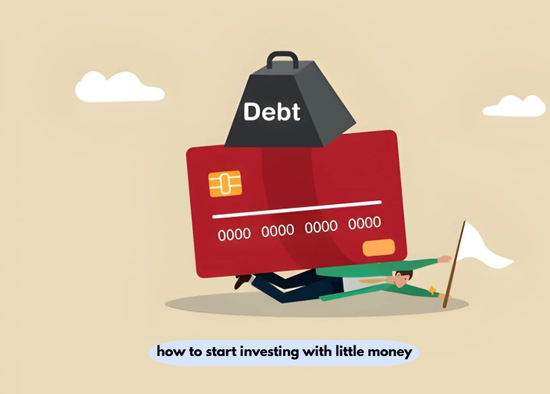
Usually not, because paying off a credit card earns a guaranteed return equal to its interest rate, so the standard advice to start investing now does not apply. The Federal Reserve’s G.19 Consumer Credit data put the average rate on credit card accounts assessed interest at 21.52% in February 2026; that figure covers only cards carrying a balance, while the average across all accounts, including those paid in full, was about 21.00%. The one case where investing still wins is an employer 401(k) match, because matched dollars are an immediate return, so contribute enough to get the full match while you pay down the card.
Frequently Asked Questions
Can I start investing with $10?
Yes, you can start investing with $10 at a brokerage that offers fractional shares. Fidelity’s minimum is $1, and Schwab’s Stock Slices minimum is $5, so $10 buys part of a stock or ETF with no commission on online trades.
What is the safest investment for beginners with little money?
U.S. Treasury securities and savings bonds are among the lower-risk choices for beginners starting with a small amount of money. They are backed by the federal government, and TreasuryDirect sells savings bonds from $25. Their growth is usually lower than stocks over long periods.
How do beginners with no experience start investing?
Open a $0-minimum account, buy one broad index fund, and automate a monthly deposit. This method needs no stock picking, since a single fund can hold hundreds of companies. Review the fund’s expense ratio once a year.
Is it better to save or invest small amounts?
Build your starter emergency fund first, then invest whatever money remains. Keep money you’ll need soon in savings, where it’s safe from losses. Money you won’t touch for several years is better suited for investing.
Where can I find reliable investing guidance for beginners?
It’s best to start with official sources like the IRS, SIPC, TreasuryDirect, and the Investment Company Institute. They publish the rules and fee data firsthand, so they’re where beginner guides get their contribution limits, protection rules, and fee averages in the first place.
Conclusion
Learning how to start investing with little money comes down to three moves: open a $0-minimum account, buy a broad index fund with fees near 0.05%, and automate the same amount every month. A $50 monthly habit is small enough to keep and large enough to matter over 30 years. Low fees and consistency, not a big starting balance, decide how far small money goes.

One comment on “How to Start Investing With Little Money: A Simple Beginner’s Guide ”