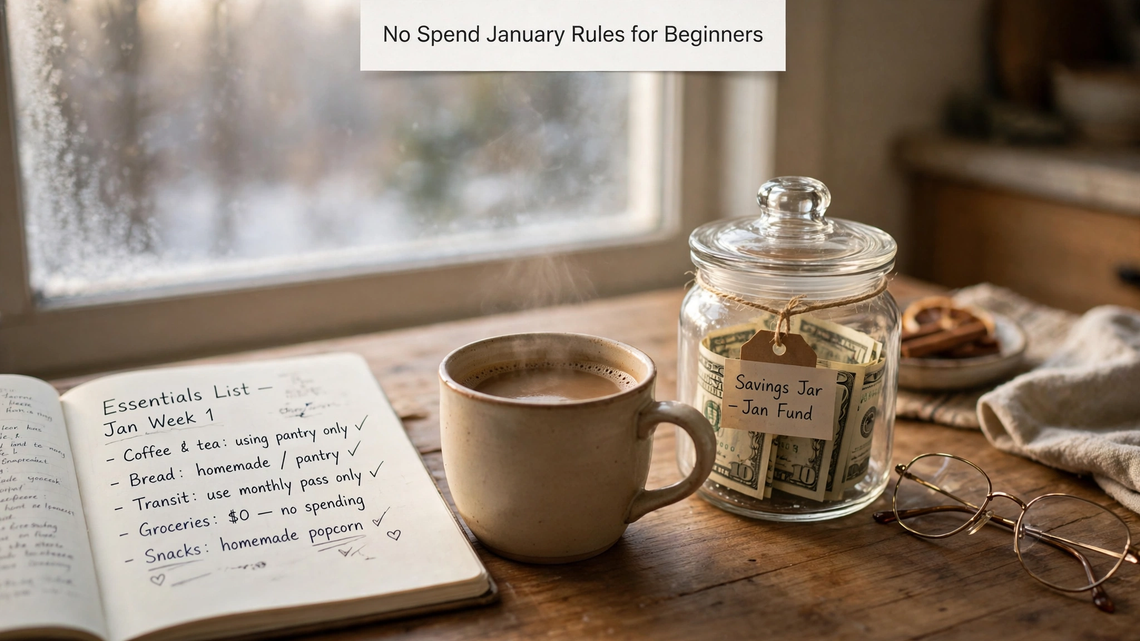
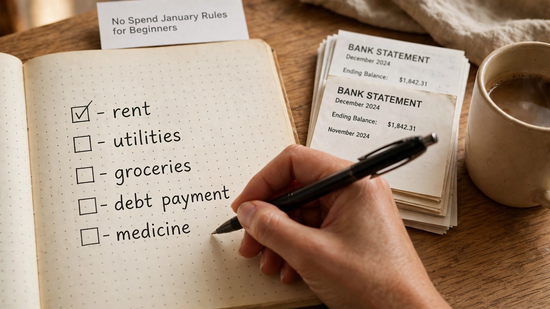
No spend January rules for beginners boil down to this: pay for needs, freeze wants, and write your exceptions down before January 1. Cover rent, utilities, groceries, debt payments, and medicine, then cut takeout, impulse shopping, and extra subscriptions for 31 days and move the savings somewhere specific.
Key Takeaways
- A no-spend January pauses every nonessential purchase for 31 days while bills, groceries, and minimum debt payments continue as normal.
- Writing an essentials list before the month starts cuts down on slip-ups, because vague rules invite daily bargaining with yourself.
- A household that trims $528 of routine discretionary spending down to $103 keeps $425 in a single month.
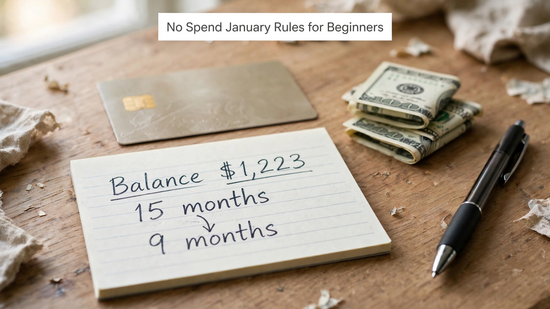
- Sending that $425 to a $1,223 holiday credit card balance cuts the payoff from 15 months to 9.
- Savings stick when they get a named job: debt payoff, an emergency cushion, or next December’s gift fund.
What Is a No-Spend January?
A no-spend January is a 31-day challenge where you buy only preplanned essentials and stop all discretionary purchases to reset habits and free up cash.
Think of it as a stress test, not a lifestyle. One strict month shows exactly where your money leaks.
How Do You Prepare for a No Spend January?
Spend 30 minutes during the last week of December setting up the month. Preparation decides whether January feels manageable or miserable.
- Pull three months of statements. Add up takeout, shopping, rideshares, and subscriptions, then divide by three. That average is your savings target.
- Open a separate savings account. A high-yield account at a different bank adds friction, so the money stays put.
- Return unwanted holiday gifts. Many retailers stretch holiday return windows into January, so check receipts now; refunds count as found money.
- Cancel December free trials. Streaming and shopping trials signed up for during holiday sales start billing in January.
- Tell your household. A partner or roommate who orders delivery on the shared card ends the challenge for both of you.
What Are the No Spend January Rules for Beginners?

Define your essentials, ban everything else, and plan ahead for the moments you’ll want to break. These ten rules cover what first-timers need most.
- Write your essentials list. Rent or mortgage, utilities, insurance, groceries, gas for work, prescriptions, and minimum debt payments go on it. Anything missing waits until February.
- Cap groceries at your normal weekly bill. The cart is where no-spend months quietly fail, as candles, snacks, and gadgets ride along with the milk.
- Eat down the pantry first. Plan week one’s meals around what already sits in your freezer and cupboards.
- Pause subscriptions instead of canceling. Keep one streaming service. Pausing the rest removes the hassle of signing up again.
- Delete saved cards from shopping apps. Typing a 16-digit number by hand adds a delay, and impulses fade fast.
- Unsubscribe from retail emails. No sale alerts, no reason to browse.
- Keep a dated wish list. Every want goes on a note with today’s date. Most items look pointless three weeks later.
- Trade paid fun for free fun. Library apps, park trails, free museum days, and potluck dinners replace bars and movie tickets.
- Approve one exception in advance. A friend’s birthday dinner or a school fee goes on the list now, with a dollar cap, so it never feels like cheating.
- Check your bank app every night. Two minutes of review keeps the month honest and shows the savings piling up.
What about gray-area purchases?
Replace only what runs out or breaks. Toothpaste, a worn-out work shoe, or an oil change counts as maintenance; a nicer version of something you already own does not. When unsure, wait 48 hours and ask whether skipping it creates a cost or a risk.
Why Start a No-Spend Month Right After the Holidays?
January works because December’s receipts are still fresh. The debt is usually sitting on a card, which turns “save money” into a concrete target.
LendingTree’s December 2025 survey put the average new holiday balance at $1,223 among the 37% of Americans who borrowed for the season. For someone in that group, one month at zero discretionary spending knocks out more than a third of the bill.
Use the quiet month to audit December line by line. Tag each charge as planned or unplanned, and the pattern shows up fast. If office exchanges stretched your budget, decide now how much to spend on Christmas gifts for coworkers next year, such as a $15 cap or one group gift, and write it down while the sting is real.
How Much Can a No-Spend January Save?
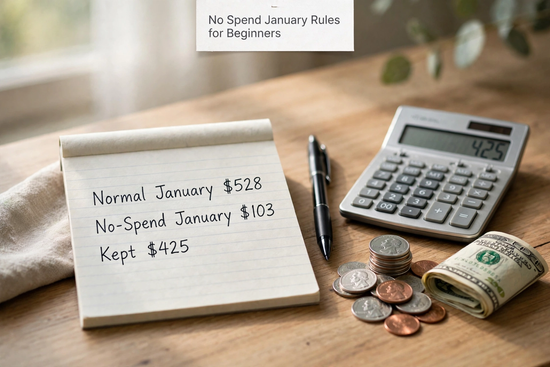
In the worked example below, one household keeps $425. Your number depends on how much of your current spending goes to takeout, shopping, and convenience.
| Spending category | Normal January | No-spend January | Kept |
| Takeout and delivery | $210 | $60 in extra groceries | $150 |
| Coffee shop drinks | $75 | $12 for home coffee beans | $63 |
| Online impulse buys | $140 | $0 | $140 |
| Streaming services | $48 | $16 for one service | $32 |
| Rideshares | $55 | $15 | $40 |
| Total | $528 | $103 | $425 |
Notice the swaps. Takeout didn’t drop to zero; it became $60 of groceries, and that honesty is what keeps the plan realistic. Build your own version of this table on day one. Tracking “kept” dollars every Sunday, the habit each money betterthisworld guide is built around, turns an abstract goal into a running score.
What does $425 do to holiday credit card debt?
It shaves months and real dollars off the payoff.
The Federal Reserve’s G.19 consumer credit release listed 22.36% as the average APR on credit card accounts charged interest in the third quarter of 2026.
Run the math at that rate. A $1,223 balance paid at $100 a month takes 15 months and costs about $178 in interest. Add the $425 to your first payment, and the balance is gone in 9 months with roughly $83 in interest, six months sooner and about $95 cheaper.
Carry more than one card? Send the surplus to the highest APR first, known as the avalanche method, since it saves the most interest. The snowball method, which clears the smallest balance first, costs a bit more but gives a faster win.
What Should You Do With the Money You Save?
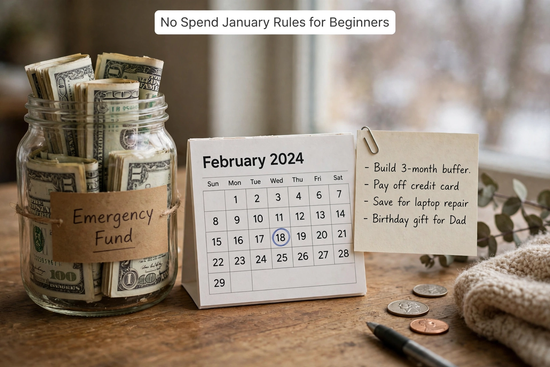
Give every dollar a job before January 31: high-interest debt first, then a starter emergency fund, then next year’s goals. Money left sitting in checking tends to drift back into spending.
Build a starter emergency fund
Aim for $1,000 or one month of essential expenses, whichever comes first. That cushion keeps a flat tire or urgent care visit off the credit card you just paid down.
Start next December’s budget now
A monthly transfer starting in February spreads the holiday cost over 11 monthly transfers instead of one.
The National Retail Federation’s 2025 holiday survey found shoppers planned to spend $890.49 per person, which works out to about $81 a month across February through December.
For anyone working out how to budget for Christmas on a low income, flip the usual order: set the total by what 11 small transfers can fund, then divide it among names. Food, travel, and décor need their own lines, because gifts are only part of the season’s cost.
Where to invest money for beginners after the challenge
Invest only after high-interest debt is gone and your cushion is in place. Knowing where to invest money for beginners comes down to order: capture any employer 401(k) match first, then open a Roth IRA holding a low-cost broad index fund.
Keep the no-spend transfer running as an automatic contribution. You already proved you can live without that money.
What Mistakes Make a No-Spend Month Fail?
The most common failure happens after the month ends, not during it. Call it the February rebound.
People treat February 1 as a reward day and buy the whole wish list, which erases the savings in a weekend. It happens because the challenge felt like deprivation, and deprivation demands payback. The fix: move the savings out of checking on January 31 and schedule the wish-list review for February 15, when the urge has cooled.
A second trap is pre-buying. Shoppers stock up on December 30, so January looks clean on paper. Count any purchase after December 26 as part of the challenge, then print this page from betterthisworld and tape the ten rules to the fridge.
One exception matters. If you already live paycheck to paycheck, with almost nothing discretionary to cut, a full freeze tends to push off car repairs, dental visits, or refills, and those cost more later. Run a single-category version instead, such as zero takeout, and protect every health and safety expense.
FAQ
Can I buy groceries during a no-spend January?
Yes, groceries count as an essential, but cap them at your normal weekly food bill. Buy ingredients, not convenience items, and skip anything that isn’t food or a household basic.
What counts as an essential during a no-spend month?
Essentials are the costs that keep you housed, fed, healthy, employed, and current on debt. Rent, utilities, insurance, groceries, work commuting, medicine, and minimum payments all qualify. Gifts, décor, and upgrades don’t.
What happens if I break a no-spend rule?
Write the purchase down, note what triggered it, and restart the next morning instead of quitting. One slip is a few dollars lost; quitting on the month loses the whole $400-plus.
Is a no spend January worth it on a tight budget?
Yes, as long as you narrow it to one category rather than freezing everything. Pick the biggest leak, like delivery apps, and leave every health and safety expense alone.
How do I keep the habit after January ends?
Keep the automatic transfer you set up during the challenge running at the same amount. Repeat a no-spend weekend once a month to stay sharp without the strain of a full 31 days.
Conclusion
No spend January rules for beginners work because they replace willpower with a written plan: needs on the list, wants on hold, and savings already assigned. Run the challenge once, send the surplus to debt or next December’s fund, and February starts with money in its place instead of on a card.