
Let me be straight with you. When I first started figuring out where to invest money for beginners, I did what most people do — I Googled it, got overwhelmed by jargon, watched a few YouTube videos about crypto millionaires, and nearly put $2,000 into a meme stock. Fortunately, I was talked out of it by a buddy.
That was a few years ago. Fast forward to today, and I’ve learned that building wealth isn’t glamorous. It’s boring, consistent, and — if you do it right — actually pretty simple.
Here’s what the investment landscape looks like in 2026 and how you can start without losing sleep (or your savings).
The 2026 Cheat Sheet for Beginners
- Priority 1: Safe cash in an HYSA (3.5%+ yields) and clearing 20%+ credit card debt.
- Priority 2: Capture your employer’s 401(k) match (it’s an instant 100% ROI).
- Priority 3: Automate $50–$300/month into broad index funds (like VTI or IVV) and stop checking the daily charts.
Step 1: Build Your Financial Foundation First

Before you touch a single investment account, get your financial house in order. This is where to invest money for beginners gets practical. This isn’t optional — it’s the step most guides skip.
- Emergency fund first. Keep three to six months of living expenses in a high-yield savings account. Right now, with the Federal Reserve holding its benchmark rate around 3.5%–3.75%, high-yield savings accounts are hovering in that same ballpark. With inflation proving a bit stubborn at around 3.8% in mid-2026, an HYSA might not give you massive real growth, but it successfully preserves your purchasing power. More importantly, it’s the safest home for cash you need within the next 24 months.
- Pay off high-interest debt. If you’re carrying credit card debt at 20%+ interest, no investment will reliably beat that. Pay it down first. Every dollar you clear is a guaranteed “return.”
I know people hate hearing this. It’s not exciting. But skipping it is one of the most common money mistakes beginners make.
Step 2: Open the Right Accounts
The account type matters as much as the investment itself.
Start with a 401(k)—especially if your employer matches
You have free money on the table if your employer offers a 401(k) match and you don’t use it. Before you accomplish anything else, at least contribute enough to win the entire match. It’s an immediate 50–100% return on that portion of your contribution, depending on your employer’s plan.
Then open a Roth IRA
One of the most effective instruments accessible to novice investors in the United States is a Roth IRA. Your money grows entirely tax-free when you make after-tax contributions. The annual contribution cap for 2026 is $7,500 (or $8,600 if you’re 50 or older). Fidelity, Vanguard, and Charles Schwab all offer Roth IRAs with no account minimums and no commission on trades.
If you’re young and in a lower tax bracket right now, the Roth IRA is almost always the smarter move over a traditional IRA.
Step 3: Pick Simple, Proven Investments
Here’s where people either do really well or go completely off the rails. Let me keep this simple.
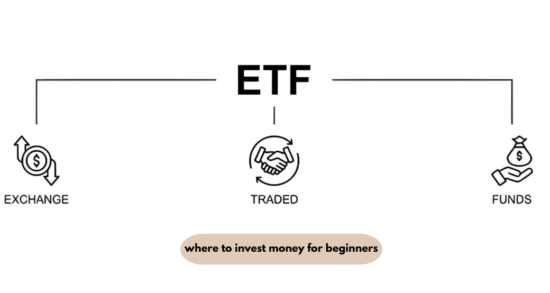
Index Funds and ETFs—The backbone of smart beginner investing
An index fund tracks a broad market index, like the S&P 500, instead of trying to beat it. According to Fidelity, the S&P 500’s average annual return has been about 11.5% over the past 40 years (through December 2025). That’s with dividends reinvested, through recessions, dot-com crashes, and everything in between.
Selecting profitable stocks is not necessary. You don’t need to time the market. You just need to own a piece of the whole thing and let it grow.
Popular beginner-friendly options include:
| Fund / ETF Ticker | Expense Ratio | Best Used For |
| Vanguard Total Stock Market (VTI) | 0.03% | Complete exposure to the entire U.S. stock market in one asset. |
| iShares Core S&P 500 (IVV) | 0.03% | Straightforward exposure to America’s 500 largest companies. |
| Fidelity ZERO Total Market (FZROX) | 0.00% | Zero-fee investing inside a Fidelity account (cannot be transferred out). |
The community over at money betterthisworld has written about why index funds remain the single most recommended starting point for new investors in 2026—not because they’re exciting, but because they work. “Just keep an eye on the expense ratio (the annual fee); look for funds with an expense ratio below 0.15% so fees don’t quietly chip away at your returns over thirty years
Target-Date Funds—Set it and forget it
If you don’t want to think about rebalancing your portfolio, target-date funds do it for you. You pick the year closest to your expected retirement (say, a “2055 Fund”), and the fund automatically shifts to more conservative investments as you approach that date. It’s not perfect, but it removes decision fatigue—which is a real problem for new investors.
High-Yield Savings & Treasuries — For money you can’t afford to lose
Not every dollar belongs in the stock market. For short-term goals—a house down payment, a car, a trip—keep that money somewhere safe and liquid. Right now, Treasury bills and high-yield savings accounts are still paying meaningful interest. Even if the window won’t last forever, it will still be useful in 2026.
Step 4: Learn Dollar-Cost Averaging — And Actually Do It
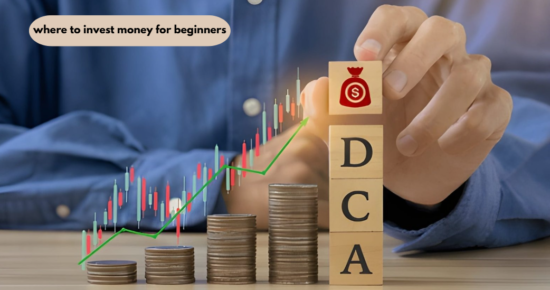
Investing a set amount on a regular basis, such as $200 per month, independent of market fluctuations is known as dollar-cost averaging, or DCA. When prices are low, you purchase more shares, and when they are high, you purchase less. Over time, this averages out.
Platforms like betterthisworld.com tech resources and robo-advisors like Betterment or Fidelity Go make automating this incredibly easy. On payday, set up an automated transfer and don’t worry about it. The investors who do best are often the ones who invest automatically and then stop watching the market obsessively.
I’ll be honest—I used to check my portfolio every single morning. It made me anxious and led to bad decisions. Automating my contributions and checking quarterly instead was one of the best behavioral changes I made.
Step 5: Avoid the Traps That Catch Most Beginners
Learning where to invest money for beginners means learning what not to do just as much.
Crypto — proceed with extreme caution. Crypto has its place in a portfolio for some people, but it is not a beginner-friendly starting point. It’s highly volatile; regulatory uncertainty remains real in 2026, and the “get rich quick” stories you see online are survivorship bias at its worst. Treat cryptocurrency experimentation entirely as speculative entertainment if you decide to do so. Limit it to 1% to 3% of your total portfolio, and only after your index fund foundation is fully built.
Individual stocks — not yet. Picking individual stocks requires time, research, and the ability to stomach big swings in a single holding. Even most professional fund managers underperform the S&P 500 over the long run. Start with index funds. Individual stocks can come later if you develop genuine interest and knowledge.
Panic selling. The market will drop. Sometimes dramatically. Historically, investors who stick to their guns have made money. Those who sell during dips lock in losses and miss the recovery. This is easier said than done, but it’s the most important habit to build.
Step 6: Keep Learning — But Stay Skeptical
The financial media and social feeds are full of noise in 2026. Every week there’s a new “hot sector,” a new guru, a new thing that’s going to “change everything.” Events like the btwradiovent event by betterthisworld highlight how many voices exist in the personal finance space today—some excellent, many just trying to sell you something.
Stick to credible, low-conflict-of-interest sources:
- Bogleheads.org — the community built around Vanguard founder John Bogle’s philosophy
- NerdWallet and Investopedia for clear explanations
- Your own brokerage’s education center—Fidelity and Schwab both have excellent free resources
Read one solid personal finance book. The Little Book of Common Sense Investing by John Bogle is still the best starting point I’ve found for new investors.
Step 7: Stay Consistent — Time Is Your Biggest Asset
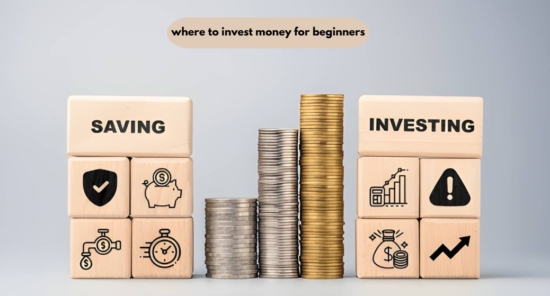
Here’s the honest math: if you invest $300 per month in an S&P 500 index fund starting at age 25, and it returns an average of 10% annually, you’d have roughly $1.9 million by age 65. Start at 35, and that number drops to about $678,000.
Time in the market always outperforms timing the market.
Choosing the incorrect fund is hardly the largest error made by novices. It’s waiting until they feel “ready.” Nobody ever feels completely ready. The best time to start is today, even with a small amount.
Where to invest money for beginners isn’t really a complicated question. The answer is boring, proven, and accessible to almost everyone reading this: tax-advantaged accounts, low-cost index funds, and consistent contributions over time.
Conclusion: Just Start — Imperfectly
I know this guide covered a lot. But strip it down to the bare minimum: open a Roth IRA with Fidelity or Vanguard, put $50 or $100 into a total market index fund, and set up a monthly auto-invest. That’s it. That’s the whole game for most people.
You don’t have to know everything before you start. You just need to begin.
Here’s your next step: Don’t let decision fatigue stall you. Pick one broker today—Vanguard, Fidelity, or Schwab. Open a Roth IRA, link your bank account, and set up an automatic transfer for an amount you won’t miss, even if it’s just $25 on your next payday. The magic isn’t the amount; it’s the habit.



One comment on “Where to Invest Money for Beginners: A Step-by-Step Guide to Building Wealth in 2026 ”