
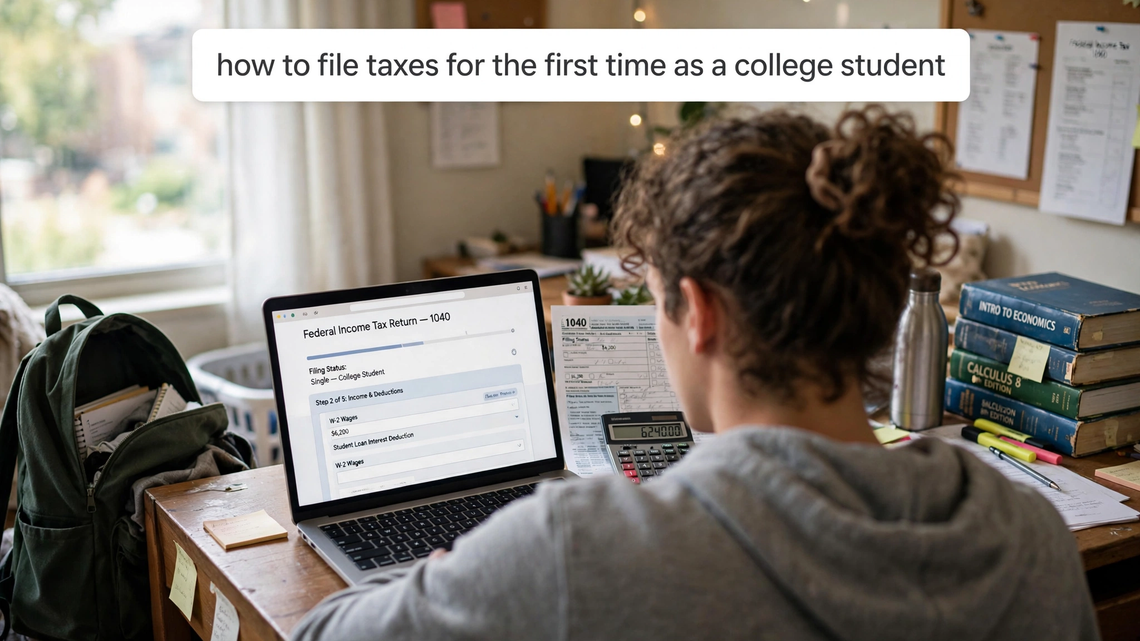
To learn how to file taxes for the first time as a college student, gather your W-2, 1099, and 1098-T forms, confirm whether your parents claim you, then file Form 1040 online by April 15, 2027. Most students owe little or nothing, and many get withheld tax refunded.
Key Takeaways
- Your 2026 federal return is due April 15, 2027.
- A dependent student still files a separate return but checks a box that shrinks the standard deduction.
- Form 1098-T from your college opens the door to education tax credits, but only one return can claim them for you.
- Filing pays off even below the income threshold whenever an employer withheld federal income tax.
- Gig earnings of $400 or more require a return because self-employment tax applies even when income tax is zero.
Do College Students Need to File a Tax Return?

Some must, and many more should. The answer depends on your income type, total earnings, and whether someone else can claim you.
For 2026 returns, a single filer’s standard deduction sits at $16,100, according to the Journal of Accountancy’s coverage of the annual inflation adjustments. Earn $14,000 from a campus job as an independent student, and taxable income drops to zero; every withheld dollar then returns to you as a refund.
Employers, schools, and gig platforms must send your forms by January 31 (February 1 in 2027, since the 31st is a Sunday). Following a few no spend january rules for beginners while you wait, such as pausing takeout and unused subscriptions, builds a cushion in case your return shows a balance due.
Can Your Parents Still Claim You as a Dependent?
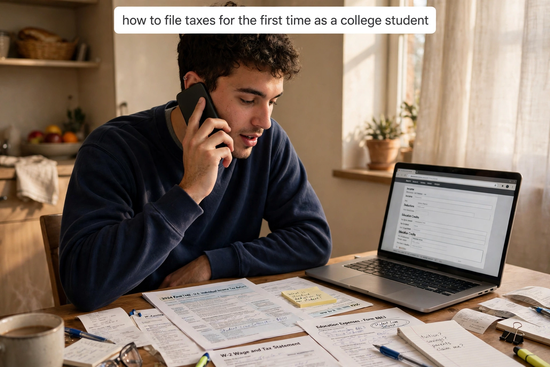
Yes, if you are under 24, a full-time student for at least five months of the year, and you don’t provide more than half of your own support. Being claimed changes your numbers, not your duty to file.
Kiplinger’s 2026 standard deduction rundown puts a dependent’s deduction at whichever is larger: a flat $1,350, or earned wages plus $450, capped at the regular single amount. A student with $6,000 in wages shields $6,450, enough to zero out the bill.
A common mistake: the student files first, leaves the “someone can claim you” box unchecked, and takes the full deduction. The parents’ e-filed return then often bounces, forcing a Form 1040-X.
Agree on who claims you before anyone hits submit. The person who claims you also takes the education credit, even if you paid the tuition yourself.
How to File Taxes for the First Time as a College Student: Step by Step
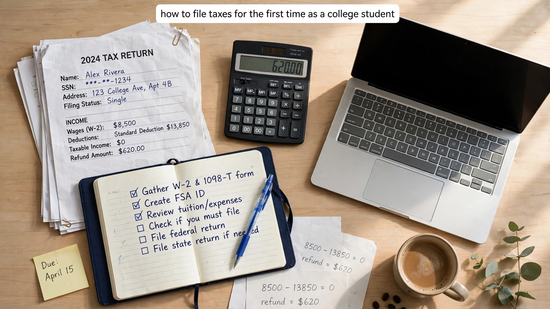
Collect your forms, settle the dependent question, choose free software, and e-file with direct deposit.
- Gather documents. Look for a W-2 from each employer, 1099-NEC or 1099-K for gig work, 1098-T from your school, 1098-E for student loan interest, and 1099-INT if a savings account paid interest.
- Read your 1098-T closely. Box 1 shows tuition payments your school received, and Box 5 shows scholarships and grants; when Box 5 exceeds Box 1, part of your aid is likely taxable.
- Confirm dependency status with your parents in writing, even by text.
- Pick a filing method. Use a free online filing program or a Volunteer Income Tax Assistance site, which many campuses host each spring.
- Choose “Single” as your filing status unless you are married.
- Enter income exactly as printed, box by box, and take the standard deduction; itemizing almost never wins for students.
- Claim credits on Form 8863 if you, not your parents, are taking them, and deduct student loan interest from your 1098-E.
- E-file with direct deposit, save a PDF copy for three years, and file a state return if you lived or worked in a state with income tax.
Anyone asking what is financial literacy and why does it matter gets a concrete answer here: you see where paycheck deductions go and how to recover them.
What Does a Student’s Tax Bill Actually Look Like?
For most first-time filers, federal income tax lands between $0 and a few hundred dollars.
Under the Tax Foundation’s 2026 bracket table, the first $12,400 of a single filer’s taxable income is taxed at 10%. Nearly every student sits entirely inside that bracket after the standard deduction, so multiply taxable income by 0.10 to estimate your federal bill.
The three scenarios below use 2026 rules. Withholding amounts are illustrative.
| Student | Status | Wages | Standard deduction | Taxable income | Tax after credits | Withheld | Refund |
| Maya, 19, campus library job | Dependent | $6,000 | $6,450 | $0 | $0 | $300 | $300 |
| Jordan, 21, internship plus part-time work | Dependent | $18,000 | $16,100 | $1,900 | $190 | $900 | $710 |
| Sam, 25, pays own $4,000 tuition | Independent | $24,000 | $16,100 | $7,900 | $0 | $1,400 | $2,400 |
Sam’s $790 income tax disappears under the education credit, and the refundable portion adds $1,000.
Maya’s case reveals a fix. If you expect to owe zero tax again next year, mark “exempt” on a new Form W-4, and the money lands in each paycheck instead of a refund months later.
Assign any refund to one or two money goals for 2027, such as a $500 starter emergency fund or next semester’s textbooks, before it vanishes into everyday spending.
Which Education Tax Credits Can College Students Claim?
The American Opportunity Tax Credit is the main one for undergraduates; the Lifetime Learning Credit covers graduate study and courses beyond four years. You can’t claim both for the same student in the same year.
The IRS caps the American Opportunity Tax Credit at $2,500 per eligible student annually, and up to $1,000 of it reaches you as cash even when your tax bill is zero. Spending $4,000 on tuition, required fees, and course materials captures the full amount, so keep every bookstore receipt.
Eligibility has limits. You must be enrolled at least half-time in a degree or credential program, and the credit works for only four tax years per student.
Room and board never count, and neither does tuition paid with a tax-free scholarship. The money betterthisworld budgeting guides show how to plan those housing costs separately from tuition.
What If You Earned Gig or Freelance Income?
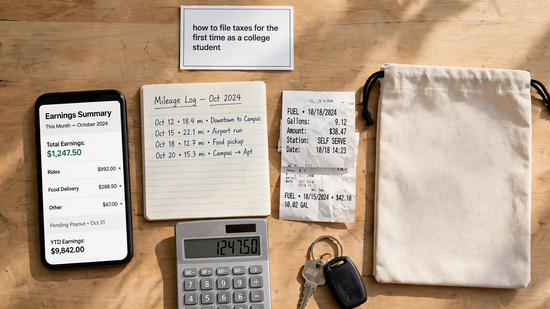
Gig work follows different rules, and the usual low-income advice stops applying. Net self-employment earnings of $400 or more require a return, and they carry a 15.3% self-employment tax on 92.35% of profit. A dependent student who clears $5,000 driving for a delivery app owes zero income tax yet still owes about $706 in self-employment tax. Download the annual earnings summary from each platform’s website or app dashboard, subtract tracked mileage and expenses on Schedule C, and set aside roughly 15% of every payout.
FAQ
Do I have to file taxes if I only made $3,000?
Usually not, but file anyway if your employer withheld federal income tax. A return is the only way to recover that money, and your refund equals the full withheld amount when taxable income comes out to zero.
Can I file my own return if my parents claim me?
Yes, you file your own return and check the box saying someone can claim you. Your parents list you on theirs, and the two returns must agree.
Are scholarships and grants taxable?
Scholarship money spent on tuition and required fees is tax-free. Any portion that covers housing, meals, or travel counts as taxable income, and you report it even without a W-2.
What happens if I miss the April 15 deadline?
If you are owed a refund, filing late carries no penalty. If you owe, penalties and interest stack up monthly, so request an extension on Form 4868, which pushes filing to October 15 but not payment.
Do I need to file a state tax return too?
Most students do, if their school state or home state taxes wages. Students who work in two states often file two state returns, one as a resident and one as a nonresident.
Conclusion
Knowing how to file taxes for the first time as a college student comes down to three moves: collect the right forms, agree on dependency with your parents, and claim every credit your tuition earns. Most students finish with a refund, not a bill. File early, keep copies, and let the habit carry into every year after graduation.