
BetterThisFacts tips by BetterThisWorld are practical rules for everyday financial choices: pay high-interest debt first, protect your credit score, invest small amounts automatically, and add income carefully. Applied together, these habits cut interest costs and build savings faster than any single trick.
Key Takeaways
- Paying $400 a month instead of $150 on a $5,000 card balance at the current average card rate saves about $2,100 in interest.
- Payment history and amounts owed together make up nearly two-thirds of a FICO score.
- A flat monthly fee on an investing app costs far more, as a percentage, on a small balance than on a large one.
- Investing $100 a month for 40 years instead of 30 more than doubles the ending balance at an assumed 7% annual return.
- Online income works best when it builds on a skill you already have, not on paid courses or upfront fees.
What Are BetterThisFacts Tips by BetterThisWorld?

BetterThisFacts tips by BetterThisWorld are short, numbers-first rules that help everyday Americans make smarter choices about debt, credit, investing, and income.
Each betterthisfacts tip must pass one test: you can act on it this week and measure the result within a month. BetterThisWorld builds every tip around a dollar figure, turning financial information into steps that show what a decision costs before you make it.
How Do You Get Out of Debt Fast?

The fastest way out of debt is to pay the minimum on everything, then send every extra dollar to the balance with the highest interest rate. This method, called the avalanche, keeps total interest as low as possible.
Credit cards are usually the first target. The Federal Reserve’s G.19 consumer credit release put the average rate on card accounts that were charged interest at 22.15% in May 2026. On a $5,000 balance—that means roughly $92 goes to interest in the first month before any payment reduces what you owe.
Worked example: how payment size changes total cost
Using that rate and assuming no new charges, here is what a $5,000 balance costs to clear:
- $150 a month: 53 months, about $2,834 in interest
- $250 a month: 26 months, about $1,298 in interest
- $400 a month: 15 months, about $738 in interest
Bumping your payment from $150 to $250 pays it off twice as fast and saves you more than $1,500 overall.
The most common mistake is splitting extra money evenly across every card. That spreads cash onto low-rate balances while the most expensive card keeps compounding. Anyone searching for how to get out of debt fast should follow this order instead:
- List every debt with its balance, interest rate, and minimum payment.
- Set every account to autopay its minimum so nothing goes late.
- Send all extra cash to the highest-rate balance.
- When that balance hits zero, roll its full payment into the next-highest rate.
- Don’t put anything new on a card you’re trying to clear.
What Are the Best Credit Score Improvement Tips?

The best credit score improvement tips focus on two things: paying every bill on time and keeping card balances low compared with their limits. Those two habits drive most of your score.
In an April 2025 release, FICO reported a national average score of 715, two points lower than a year earlier. If your score is 680, you sit 35 points below that benchmark, and closing the gap often earns a better interest rate on your next loan.
| Score factor | Weight in FICO score | What to do this month | Source |
| Payment history | 35% | Turn on autopay for every minimum payment | myFICO: What’s in my FICO Scores? |
| Amounts owed | 30% | Pay balances down before the statement closing date | myFICO: What’s in my FICO Scores? |
| Length of credit history | 15% | Keep your oldest no-fee card open | myFICO: What’s in my FICO Scores? |
| New credit | 10% | Space new applications at least six months apart | myFICO: What’s in my FICO Scores? |
| Credit mix | 10% | Avoid opening loans just to add variety. | myFICO: What’s in my FICO Scores? |
Timing matters because card issuers usually report the balance shown on your statement, not the balance after you pay. Paying a $900 balance on a $3,000 limit down to $200 before the statement closes drops reported utilization from 30% to under 7%.
Which Micro Investing Apps Are Best for Young Adults?

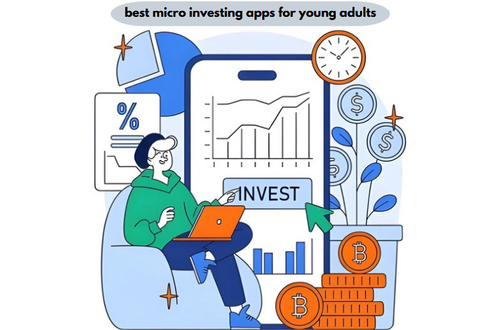
The best micro investing apps for young adults charge low fees relative to your balance, support automatic deposits, and let you buy fractional shares of diversified funds. Round-up features are a bonus, but scheduled deposits do more of the work.
Fee structure is the decision most people overlook. Suppose an app charges a flat $3 a month. On a $500 balance, that is $36 a year, or 7.2% of the account, which your returns must beat before you earn anything. On a $10,000 balance, the same fee is only 0.36%.
Use a simple rule. Under $1,000, pick an app with no subscription or a percentage fee below 0.5%. Above roughly $7,500, a $3 flat fee falls below 0.5% a year and becomes reasonable if the features are worth it to you.
How Can Beginners Earn Income Online?

For beginners, the steadiest income comes from selling a skill you already have, like writing, tutoring, design, or bookkeeping, on big freelance sites. Selling old stuff or doing paid user testing pays less but faster.
The safest rule for how to make money online for beginners is to never pay to get paid. Programs that charge upfront for a system, starter kit, or promised income are the most common trap.
Test one income source for 30 days and track both hours and earnings. A gig that pays $300 for 20 hours of work is $15 an hour before taxes, and side income is subject to self-employment tax, so set a portion aside each time you are paid. Send the rest to your debt list first, then to investing.
What Daily Habits Build Wealth Over Time?

The smart money habits to build wealth are automatic saving, a starter emergency fund, avoiding revolving card debt, and investing early and consistently. Time in the market does more work than picking the right stock.
The Federal Reserve Bank of New York’s Quarterly Report on Household Debt and Credit showed card balances of $1.26 trillion in the second quarter of 2026. Every dollar of interest on your share of that debt is a dollar that never reaches an investment account, so clearing card balances is the first wealth move, not a side task.
The right planning order in your twenties
The most useful financial planning tips for young adults come down to order: a starter emergency fund, the full employer retirement match, high-interest debt, and then larger goals.
An early start pays off. Investing $100 a month at an assumed 7% annual return grows to about $262,000 over 40 years, compared with about $122,000 over 30 years. The extra decade costs only $12,000 in contributions but more than doubles the result.
When Does the Usual Advice Not Apply?

Paying off debt before investing is not always the right order, and the money betterthisworld rule is to compare returns before choosing where each dollar goes. If your employer matches 401(k) contributions, collect the full match even while carrying card debt, because an instant 50% or 100% return beats any card rate, and skip extra payments on low-rate debt like a 4% car loan when that cash can fund savings. Without an emergency cushion, save one month of expenses first, since one surprise bill otherwise lands right back on a credit card.
Frequently Asked Questions
What is the fastest way to pay off credit card debt?
The fastest way is the avalanche method: pay minimums everywhere and put all extra cash toward the highest-rate card. The payment amount matters even more than the method. On a $5,000 balance, moving from $150 to $400 a month shortens payoff from more than four years to 15 months.
How long does it take to improve a credit score?
Lowering card utilization can raise a score within one or two billing cycles. Late payments take much longer to fade, and their effect weakens only as on-time months pile up.
How much do you need to start investing with an app?
You can start with just a few dollars because fractional shares let you buy part of a fund. The bigger concern is fees, since a flat monthly charge takes a large bite out of a small balance.
Is earning income online realistic for beginners?
Yes, it is realistic when you sell an existing skill instead of buying a get-rich program. The first few months will be slow while you collect reviews and find regular clients.
Should you invest or pay off debt first?
Pay off high-interest debt first, but still contribute enough to collect any employer retirement match. Debt at 4% or below can usually sit alongside investing, while card debt above 20% should be cleared before extra investing.
Conclusion
BetterThisFacts tips by BetterThisWorld come down to one habit: put a dollar figure on every financial decision before you make it. Clear the highest-rate debt first, guard your payment history, invest a little every month, and let compounding do the rest.



One comment on “BetterThisFacts Tips by BetterThisWorld: Smart Tips for Better Everyday Decisions”