
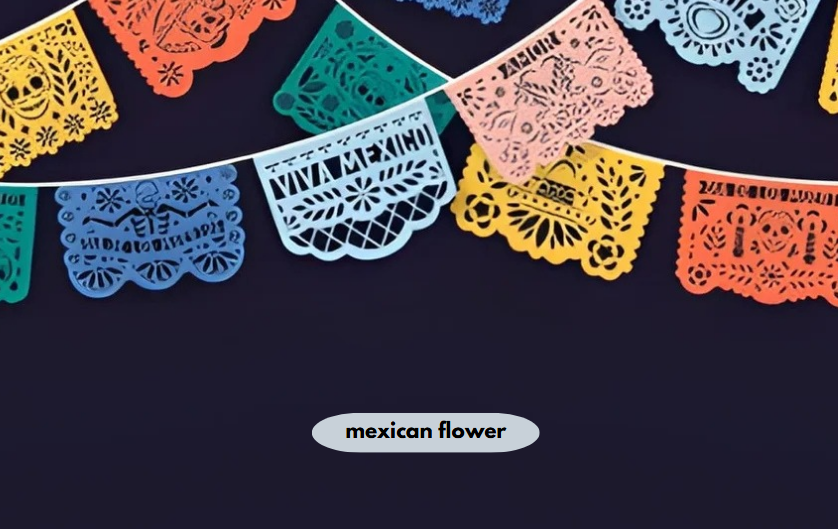
Four Mexican flower crafts consistently work as Etsy products: papel picado garlands, paper marigold bunches, floral crowns, and dried marigold wreaths. Quick builds like garlands pay more per hour, while larger pieces like wreaths pay more per order, so the right pick depends on your weekly hours.
Key Takeaways
- Per hour, the 20-minute papel picado garland leads the table at $32.55, leaving $10.85 on each sale after fees and materials.
- Per order, the dried marigold wreath leads at $35.40, but each one ties up 100 minutes of your time.
- Ten hours split into 15 garlands and 3 wreaths bring in about $269, which averages $26.90 an hour.
- Listing a wreath with free shipping and no price increase loses $10.86 on every order.
- Seasonal listings should be published in early September, well before Día de Muertos on November 1.
What Counts as a Mexican Flower Craft?
Mexican flower crafts are handmade pieces or digital patterns that feature flowers central to Mexican celebrations, especially marigolds, produced in paper, thread, fabric, or dried plant material.
Which Mexican Flower Crafts Are Worth Making for Etsy?
Five formats pair clear demand with low material cost: garlands, paper marigold bunches, embroidered hoops, floral crowns, and dried wreaths. The table turns each one into a 10-hour work week using sample prices, which you should replace with your own.
Fees in every row equal $0.45 plus 9.5% of the item price and shipping combined, and the buyer pays postage.
| Product | Item + shipping | Materials | Etsy fees | Net per order | Minutes to make | Orders in 10 hours | Weekly net |
| Papel picado garland | $16 + $4 | $2.80 | $2.35 | $10.85 | 20 | 30 | $325.50 |
| Paper marigold bunch (8 blooms) | $24 + $6 | $5.20 | $3.30 | $15.50 | 50 | 12 | $186.00 |
| Embroidered flower hoop | $38 + $5 | $7.00 | $4.54 | $26.46 | 120 | 5 | $132.30 |
| Floral crown | $42 + $6 | $11.00 | $5.01 | $25.99 | 75 | 8 | $207.92 |
| Dried marigold wreath | $58 + $12 | $15.50 | $7.10 | $35.40 | 100 | 6 | $212.40 |
Garlands win on speed, and wreaths win on ticket size. Dried sprigs from cypress trees give a wreath its shape and fill gaps between marigolds, so one bundle of greenery covers several builds.
Which product should a beginner make first?
Start with the papel picado garland, which takes 20 minutes, costs $2.80 in supplies, and ships flat. A 30-garland batch uses $84 in supplies and nets $325.50 once it sells out. Two tips for the first batch: cut every garland’s tissue layers at once, and photograph one finished piece before you make the rest.
How high should the embroidered hoop be priced?
Price it near $53 to reach $20 per hour. At $38 the hoop pays only $13.23 per hour, because two hours of stitching leave $26.46. At $53 with $5 shipping, fees are $5.96, materials are $7.00, and the net is $40.04.
How Much Can a 10-Hour Week of Crafting Earn?
A split of 15 garlands and 3 wreaths nets about $269 in 10 hours, or $26.90 per hour. The garlands use five hours and return $162.75, and the wreaths use five hours and return $106.20.
Garlands alone would net $325.50 only if 30 buyers appear every week. Demand sets the ceiling before your hours do, so a high-ticket product protects your money when garland orders slow down. Fill any slack with wreaths, because each sale there covers more of the week.
How Much Does Etsy Keep From Each Order?
On orders like these, Etsy keeps about 10–12% in standard fees and over 25% when an order arrives through Offsite Ads.
Etsy’s seller page lists $0.20 to publish a listing, 6.5% of item price plus shipping on each sale, 3% plus $0.25 for U.S. payment processing, and a 15% fee on orders that come from Offsite Ads.
On the $20 garland order, standard fees are $2.35, or 11.75%. An ad-driven sale adds $3.00 and cuts the net from $10.85 to $7.85, which is $23.55 per hour. Price every item so the ad-driven version still clears your hourly target.
Log each order’s price, shipping, fees, and materials in one sheet. Side-income planning of the money betterthisworld kind depends on records like these, and the fee information appears on every payout statement.
What is the most common pricing mistake?
The most common mistake is switching to free shipping without raising the item price.
A wreath listed at $58 with free shipping nets $24.54, after $5.96 in fees, $15.50 in materials, and $12 in postage. Charging $58 plus $12 shipping, or listing at $70 with shipping included, nets $35.40. The error costs $10.86 on every order.
Who Buys Mexican Flower Crafts, and When?

Gift shoppers, home decorators, and families who build altars for Día de Muertos buy most of these pieces, and many search in Spanish.
The U.S. Census Bureau’s 2024 estimate puts the Hispanic or Latino population near 68.1 million, about 20% of residents. Spanish product names in your titles put your shop in front of those searches.
Shoppers type phrases such as “Mexican flowers” and “Hispanic flowers,” so place both in your tags. Local news sites and city event calendars announce Día de Muertos festivals each autumn, which helps you find booths where the same stock sells with no Etsy fees.
Which occasions keep sales going all year?
Weddings, quinceañeras, Cinco de Mayo, and Mother’s Day on May 10 sustain demand outside autumn. Crowns suit weddings and quinceañeras, marigold bunches suit altars, and garlands suit parties. Rotate your featured listing by season instead of opening a second shop.
How Do You Set Up a Listing That Gets Found?
Pick one product, one occasion, and one ship-by date, then build the listing around that trio.
Etsy’s 2025 annual report lists 86.5 million active buyers and 5.6 million active sellers on its marketplace. That is roughly 15 buyers per seller. Buyers are people who purchased within a year and sellers are shops with a sale or charge in that year, across every category, so the ratio shows scale rather than niche demand. Narrow listings compete better than broad “floral decor” ones.
- Choose the product and the occasion, such as Día de Muertos, a quinceañera, or a wedding shower.
- Write the title with the Spanish name first, then the English term, then the occasion.
- Take five photos: the item alone, in a room, beside a ruler, a material close-up, and the packed parcel. Window light gives better pictures than overhead bulbs.
- Put size, materials, and care info in the first two lines of the description.
- Post a 15-second video making on social media and name the product in the caption.
- Pack garlands flat between cardboard and box wreaths with tissue around the petals.
- Publish by early September.
The weekly math changes if you resell pieces made by Mexican artisans instead of making them yourself. Your hours no longer drive the profit, so track margin per unit, name the workshop or region in each listing, and get the maker’s agreement before you resell.
FAQ
What is the easiest Mexican flower craft to sell on Etsy?
A papel picado garland is the easiest because it takes about 20 minutes, ships flat, and costs under $3 in supplies. Paper marigold bunches come next, since crepe paper is cheap and the blooms photograph well.
Which flower is most tied to Día de Muertos crafts?
Marigolds, known in Spanish as cempasúchil, are the flower most associated with Día de Muertos. Their orange color is the reason paper and dried versions sell so well around altars.
How profitable are Mexican flower crafts after Etsy fees?
In the sample table, net profit runs from $10.85 to $35.40 per order, or $13.23 to $32.55 per hour. Your own results shift with price, build speed, and how many shoppers find the listing.
Is it respectful for non-Mexican makers to sell these crafts?
Yes, if you credit the tradition, use correct Spanish names, and avoid costume-style stereotypes. Explain where a design comes from, and say so plainly when artisans made the piece.
How early should seasonal listings go live?
Publish Día de Muertos listings in early September so they have weeks to earn reviews and search placement before November 1. Late listings run into delivery deadlines that many buyers will not risk.
Conclusion
Mexican flower crafts reward sellers who run the numbers before cutting the first petal. Price each piece after fees and shipping, split your hours between a fast product and a high-ticket one, and publish seasonal items by early September.