
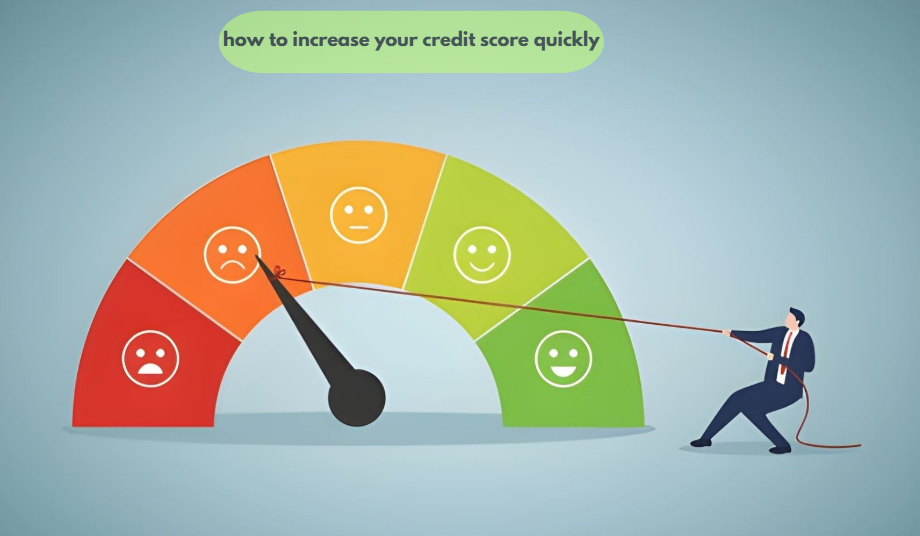
The fastest way to increase your credit score is to pay down revolving credit card balances below 30% of your credit limit, dispute inaccurate items on your credit report, and request a credit limit increase. These three moves alone can shift your score by 20–80 points within 30–60 days — without opening a single new account.
I know this personally. After a medical emergency wiped out my savings and maxed out two cards, my FICO dropped to 541. Over the next 14 months, I tested every legitimate strategy I could find — not theories, but actions with measurable results.If you are trying to figure out how to increase your credit score quickly, here is exactly what actually moved the needle for me.
How Credit Scores Are Calculated (Know This First)

The FICO formula hasn’t changed much in structure, but the models lenders use have shifted. Many top mortgage lenders now use FICO Score 10T, and auto lenders have widely adopted VantageScore 4.0 — both of which weigh trending data (your balance trajectory over 24 months) more heavily than older models.
| Factor | Weight |
| Payment History | 35% |
| Credit Utilization | 30% |
| Length of Credit History | 15% |
| Credit Mix | 10% |
| New Credit / Hard Inquiries | 10% |
12 Proven Ways to Increase Your Credit Score Quickly
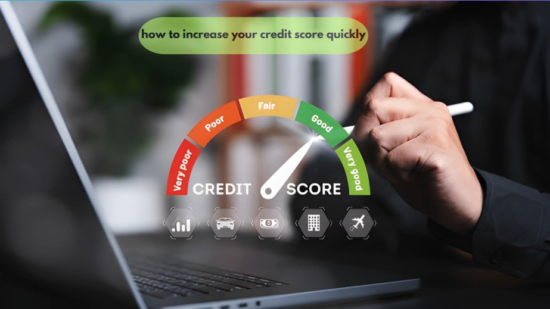
1. Crush Your Credit Utilization — The Fastest Move Available
Credit utilization controls 30% of your score and resets every single billing cycle. If your card limit is $6,000 and your balance is $4,800, you’re at 80% utilization. Pay that down to $1,800—the 30% threshold—and you can see a 40–70 point jump within one statement period. Aim for under 10% if you’re targeting the 750+ tier.
Under FICO 10T, lenders can see whether your balances have been rising or falling over the past two years. A downward trend scores better than a flat, low balance. The number itself is not as important as consistency.
2. Pull Your Free Credit Reports and Dispute Every Error
A 2024 Consumer Reports study found that 34% of Americans had at least one material error on one of their three bureau reports. That number hasn’t improved.
The Fair Credit Reporting Act gives you a legal right to free weekly reports at AnnualCreditReport.com. Look for accounts that don’t belong to you, late payments recorded on months you paid on time, closed accounts listed as open, duplicate collection entries, and balances not updated after payoff.
Directly file complaints with TransUnion, Experian, and Equifax. Every bureau has thirty days to conduct an investigation. When I disputed a $340 medical collection that wasn’t mine, it was removed in 22 days, and my Equifax score moved up 31 points the following month.
3. Request a Credit Limit Increase With No Hard Inquiry
You can lower your utilization ratio without paying an extra dollar by requesting a credit limit increase. Major issuers including Chase, Capital One, Discover, and Citi allow limit increase requests through their apps or by phone—using only a soft pull that doesn’t affect your score.
“Can I request a credit limit increase without a hard inquiry?” should be your direct question when you call. Before they move forward, get confirmation. A $2,000 limit increase on a card you carry $800 on instantly drops your per-card utilization.
4. Become an Authorized User on a Trusted Account
If your credit file is thin, young, or damaged, becoming an authorized user on a family member’s or trusted partner’s well-managed card is one of the fastest ways to inherit positive history—account age, on-time payments, and low utilization all transfer to your report.
You don’t need to physically use the card or even hold it. The account just needs to be added to your credit file by the primary cardholder calling their issuer.
5. Automate Every Payment — Zero Exceptions
A single 30-day late payment drops most scores by 90–110 points and stays on your report for seven years. In today’s high-rate environment, a damaged payment history can cost you percentage points on a mortgage, translating to tens of thousands of dollars over the life of a loan.
Set up autopay for each account’s minimum required payment. Then manually pay your actual target amount mid-cycle. This eliminates human error entirely.
6. Pay Mid-Cycle to Control What Gets Reported
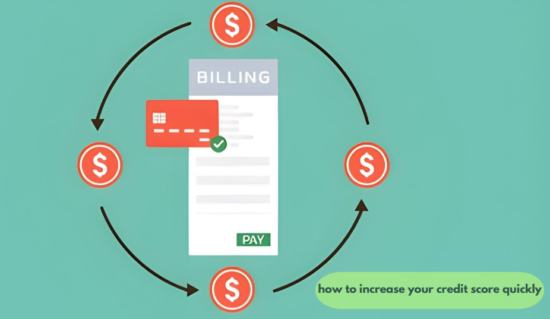
Your card issuer reports your balance to the bureaus on your statement closing date, not your due date — and those two dates are typically 21–25 days apart.
If you pay down $1,500 of a $2,500 balance before the closing date, the bureau only sees $1,000. Making a mid-cycle payment directly manages your reported balance without forcing you to change your spending habits.
7. Use Experian Boost and UltraFICO
Experian Boost now includes on-time payments for utilities, phone bills, streaming services, rent (via select platforms), and some buy-now-pay-later accounts. According to Experian’s 2025 data, thin-file users see an average gain of 15–21 points.
UltraFICO, available through Experian, uses your bank account data — average balance, absence of overdrafts, savings consistency — to potentially generate a higher score than standard FICO. Both are opt-in and free.
Note: These tools currently affect only your Experian score. Confirm which bureau your target lender pulls before relying on them.
8. Keep Old Accounts Open — Even the Ones Collecting Dust
Closing an old card simultaneously shortens your average account age (15% of your score) and reduces your total available credit limit—which spikes your utilization ratio. That’s a double hit in a single move.
Instead of closing it, you can cut the physical card up, set a small recurring charge with autopay on it to keep it technically active, and leave the account open. If you are tracking market trends or building a broader portfolio, you can also look into insights on betterthisworld stocks to see how smart credit choices fit into a larger wealth strategy
9. Build Credit Mix With a Credit-Builder Loan
If your report shows only credit cards, adding an installment product signals to lenders that you can manage different types of debt. Platforms like Self, CreditStrong, and many local credit unions offer credit-builder loans between $500 and $2,500 with monthly payments that report to all three bureaus.
You don’t receive the cash until the loan is paid off, which also builds savings. These are especially effective for people starting from scratch or recovering from bankruptcy.
10. Write Goodwill Letters for Old Late Payments
Write a goodwill letter addressed directly to the original creditor — not the bureau — explaining the circumstances and respectfully requesting removal as a goodwill adjustment. It’s not guaranteed, but it costs nothing and takes 20 minutes.
Some issuers are historically more receptive than others. For inspiration on how to structure your approach, you can check out the btwradiovent event by betterthisworld to guide your outreach. Send via certified mail and follow up in 30 days.
11. Handle Collections the Right Way
Under FICO 10T and VantageScore 4.0, paid medical collections under $500 are now ignored entirely, and all paid collections carry substantially less weight than unpaid ones. After paying any medical collection, check your reports—it may already be gone.
For non-medical collections, always request a “pay for delete” agreement in writing before sending payment. Some collectors will agree; many won’t. Also verify the statute of limitations in your state before paying old debt, since payment can restart the clock in some jurisdictions.
12. Space Out New Credit Applications Strategically
Each hard inquiry typically drops your score by 5–10 points and stays visible for two years. Multiple applications in a short window signal risk to automated lending systems.
Smart exception: when rate-shopping for a mortgage or auto loan, FICO groups all inquiries within a 14–45 day window as a single inquiry. Use that window intentionally—compare all your options within that period rather than spreading applications across months. You can read more about how these inquiries impact your credit on money betterthisworld to plan your applications perfectly.
Realistic Timeline: What to Expect
- Days 1–7: Pull all three reports, file disputes, request limit increases, enroll in Experian Boost
- Weeks 2–4: Dispute results start arriving; mid-cycle payments reduce reported balances
- Months 1–3: Score typically moves 30–80 points from utilization reduction and error removal
- Months 3–6: Consistent payment history compounds; goodwill letters resolve
- Month 6–12: Longer-term negatives age and fade; trending data in FICO 10T starts working in your favor
Frequently Asked Questions
Does checking my own credit score hurt it? No. Checking your own score is always a soft inquiry with zero impact on your FICO.
What score do I need to buy a house? The minimum for the majority of traditional loans is 620. FHA loans require a 3.5% down payment of 580. To get the best available mortgage rate, most lenders want 740 or above.
Can I realistically gain 100 points quickly? Yes—if your utilization is very high and you pay it down significantly or a major error is removed. A 40–80 point jump in 30–60 days is realistic for most people with one or two major issues to fix. A full 100-point gain typically takes 3–6 months.
Do buy-now-pay-later accounts affect my score? Yes. As of 2025–2026, several major BNPL providers now report to at least one bureau. Negative grades may result from unpaid BNPL payments. Manage them like credit cards.
One Action Today Beats a Perfect Plan Tomorrow
Don’t try to do all 12 at once. Do this tonight: go to AnnualCreditReport.com, pull all three reports, and look for one error and your current utilization percentage. If you want to know how to increase your credit score quickly, fix those two things first because they move the needle faster than any other combination of actionsDon’t try to do all 12 at once. Do this tonight: go to AnnualCreditReport.com, pull all three reports, and look for one error and your current utilization percentage. Fix those two things first—they move the score more quickly than any other combination of actions.
Make a note of your score today, select the two tactics from this list that best address your most pressing issue right now, and schedule a follow-up appointment for sixty days from now to assess your progress. That’s it. Start there.


One comment on “How to Increase Your Credit Score Quickly: 12 Proven Ways That Work”