
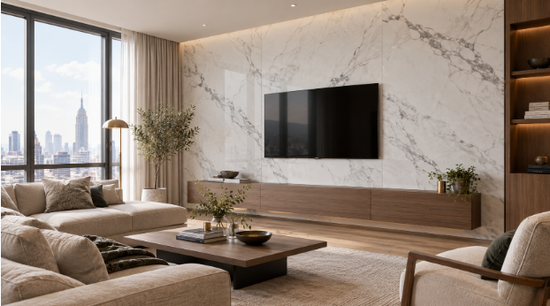
A thoughtfully designed wall can become the defining feature of an interior. It can introduce movement, complement architectural details, and establish a visual connection between furniture, lighting, and surrounding materials. Marble has long been associated with sophisticated interiors because of its distinctive veining and natural variation. Today, marble-inspired wall panels offer another way to achieve this aesthetic in contemporary residential and commercial spaces.
From minimalist apartments to hotel receptions and professional offices, these decorative surfaces provide opportunities to create distinctive feature walls without relying exclusively on natural stone slabs. The best results come from treating the wall as part of the overall design rather than an isolated decorative element.
The Lasting Appeal of Marble-Inspired Interiors
Marble-inspired finishes can transform a plain wall into a focal point through contrasting colors, flowing veins, and patterns that resemble natural mineral formations. Unlike a simple painted surface, a marble-look design introduces visual movement, helping a room feel more considered and distinctive.
White backgrounds with subtle gray veining often complement bright, understated interiors. Dark surfaces with gold accents can produce a more dramatic atmosphere, while warmer beige and cream patterns work well with natural wood, muted upholstery, and soft lighting.
These finishes can suit different design approaches. A contemporary apartment might feature a light marble-inspired wall behind a television, while a boutique retail space could use a darker pattern to frame product displays. In reception areas, a carefully positioned panel can create an inviting backdrop without requiring numerous decorative accessories.
The objective is not to make every surface look luxurious. It is to select a finish that contributes to the room’s purpose and visual balance.
Beyond Natural Stone: The Role of Decorative Wall Panels
Natural marble rock has unique patterns and characteristics; however, large stone slabs require significant weight, manpower, special equipment, and proper installation. Decorative materials offer an entirely different approach to the design and construction of objects where the main goal is the marble look.
Marble look panels are made using decorative composite material, which imitates the appearance of natural stone. The collection of marble look by WALLSMARK includes bamboo charcoal laminated panels with patterns of Calacatta, onyx, black marble, and other types of natural stone.
It is essential to note that the material is not marble, and its characteristics should be reviewed separately. Even though the patterns of natural rock were used for inspiration, the properties, structure, maintenance, and repair methods of composite panels are not the same as those for actual marble.
For projects where decorative appearance and practical handling are priorities, Marble Panels for Walls are worth exploring alongside other wall-finishing options. The appropriate choice depends on the setting, installation requirements, budget, and desired visual effect.
Five Design Ideas for Marble Accent Walls
1. Create a Focal Point in the Living Room
A marble-inspired panel behind a television or entertainment unit can anchor the living area and connect the wall with the surrounding furniture. Light-colored patterns pair naturally with beige upholstery, pale flooring, and understated cabinetry.
For a stronger contemporary look, consider a dark background with contrasting veining. Keep nearby decorative objects relatively simple so the wall remains the primary visual feature.
2. Introduce a Distinctive Bedroom Backdrop
A feature wall behind the bed can bring structure and character to a bedroom. Subtle white, gray, or warm neutral patterns often complement upholstered headboards and soft bedding without overwhelming the space.
Pay attention to lighting placement. Wall-mounted lights and bedside lamps can highlight veining, but harsh illumination may also produce unwanted reflections on glossy finishes.
3. Make Reception Areas More Memorable
In offices, hotels, and professional environments, the reception wall often establishes the first impression of the interior. A coordinated marble-inspired surface can provide a polished backdrop for a desk, seating area, or signage.
The design should support the identity of the business without becoming visually distracting. Neutral furniture, restrained metal accents, and balanced illumination can help maintain a professional atmosphere.
4. Add Character to Retail and Hospitality Spaces
Restaurants, showrooms, boutiques, and interiors in the field of hospitality can use marble look panels to set off specific areas. A panel at the back of displays, waiting seats, or other carefully chosen elements serves to set a particular texture, without the need to match it elsewhere throughout the premises.
Commercial projects should consider cleaning routines, traffic, potential impacts, and the specific technical requirements of the installation location before selecting a product.
5. Coordinate Marble With Wood and Metal
Marble patterns do not need to exist in isolation. Wood-look finishes can add warmth, while metallic details introduce contrast and a more contemporary edge.
For example, a white marble-inspired feature wall can work with walnut-colored cabinetry and modest brass accents. A darker pattern might pair with matte black details and lighter furniture to prevent the room from feeling excessively heavy.
The most successful combinations usually establish a clear hierarchy: one material leads, while the others support it.
Large-Format Panels and the Importance of Layout
The appearance of a finished marble wall depends on more than its color. Panel dimensions, vein direction, joint positions, and surrounding architectural features all influence the outcome.
WALLSMARK lists large-format marble-look panels measuring 48 by 108 inches, providing approximately 36 square feet of nominal coverage per sheet. Confirm the dimensions of the specific product before ordering, as product details and availability may vary.
Larger panels can help reduce the number of visible interruptions across a broad wall, although the final result still depends on the layout and installation method. Before fixing the panels, arrange the design on paper or review the sheets together to understand how the veining will appear across joints.
Measure openings, corners, outlets, and wall transitions carefully. Allow for cutting waste and plan perimeter details. A strong pattern can lose its impact when cuts appear unbalanced or seams fall in distracting positions.
Installation and Maintenance Deserve Equal Attention
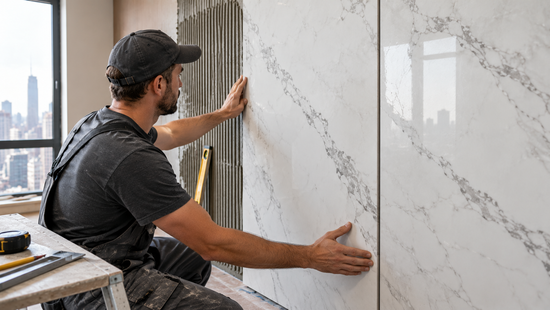
A visually appealing panel has to be properly installed in a suitable environment. Make sure the wall substrate is prepared according to the manufacturer’s recommendations and the chosen method of adhesion or fixing is compatible with the panel and surface.
Accurate measuring and cutting are of particular importance near electrical outlets, built-in furniture, door frames, and corners. Larger-scale installations may also benefit from the involvement of an experienced professional who knows how to handle and finish panels correctly.
Not every marble-effect panel is suitable for every room. Particular care has to be taken near water sources, in enclosed spaces, on the outside of buildings, and in environments with specific fire safety or building regulations. It is recommended to double-check the latest product documentation before making a choice for such conditions.
Finally, maintenance and cleaning should also be performed in accordance with the manufacturer’s guidelines. A microfiber cloth and an approved mild cleaning solution may be sufficient for most decorative panels, but abrasive pads and improper chemicals can ruin their surface. It is a good idea to test any maintenance method on an inconspicuous part of the panel if it is allowed by the manufacturer’s instructions.
Choosing a Finish That Works With the Entire Room
When choosing a finish, consider existing flooring, cabinetry, wall paint, furniture, and available light. A sample viewed on a screen may look different under natural daylight or warm interior lighting.
Before committing to a large order, request a sample when available and examine it in the intended space. Compare its undertones with nearby materials and view the finish at different times of day.
Budget planning should also account for accessories, adhesive, wall preparation, labor, delivery, cutting waste, and finishing materials. Comparing the complete installed cost gives a more realistic picture than evaluating the sheet price alone.
For buyers exploring Wall Panels NYC, WALLSMARK offers decorative surface collections that include marble-look, wood-look, metal-look, and other wall-finishing options. Its New Rochelle showroom provides an opportunity to discuss available materials and review options for residential or commercial projects.
Final Thoughts
Marble-inspired wall panels bring pattern, contrast, and a distinctive architectural character to contemporary interiors. Their versatility makes them worth considering for living rooms, bedrooms, offices, reception areas, and selected retail or hospitality settings.
A successful design starts with the purpose of the space, followed by careful finish selection, panel layout, substrate preparation, and verification of the product’s intended use. When these details work together, a marble-look accent wall can become a cohesive part of the interior rather than simply another decorative surface.
