
Defining Parcel Dimensioners for Small Package Measurement
Parcel dimensioners are built for the world of small packages. Think of the boxes and mailers that move through e-commerce fulfillment centers or retail distribution hubs every single day. These devices are designed to quickly and accurately capture the dimensions of individual items, from tiny envelopes to larger boxes. They are often integrated into conveyor systems or placed at packing stations, measuring items as they pass through.
The primary goal of a parcel dimensioner is speed and precision for high-volume, smaller shipments. They need to keep up with the pace of modern logistics, where hundreds or even thousands of packages might be processed in an hour. Accuracy here is key, as even small measurement errors can impact dimensional weight calculations and shipping costs.
These systems typically measure length, width, and height with great detail, often down to the millimeter. They are the workhorses for operations dealing with a constant stream of individual parcels.
Defining Pallet Dimensioners for Larger Freight
Pallet dimensioners tackle a different scale of freight. These are the systems used for larger, bulkier shipments that are typically consolidated onto pallets. This includes everything from manufacturing components to wholesale goods. Instead of individual boxes, a pallet dimensioner measures the entire load, including any overhang or irregular stacking.
These dimensioners are built to handle the complexities of palletized freight. This might involve measuring loads that are wrapped in plastic, stacked unevenly, or have items extending beyond the pallet’s edges. The focus is on capturing the overall cubic space occupied by the shipment.
Pallet dimensioners are essential for accurately assessing the volume of larger, consolidated shipments. They are often found in receiving areas, shipping docks, or staging zones where full pallets are handled.
Key Distinctions in Size Capacity and Measurement Range
The most obvious difference lies in their size capacity. A parcel dimensioner is built for smaller items, fitting comfortably on a counter or a small conveyor section. Its measurement range is limited to the dimensions of individual packages.
Conversely, a pallet dimensioner is a much larger piece of equipment, designed to accommodate full-sized pallets. Its measurement range extends to much larger dimensions, capable of capturing the volume of an entire palletized load, which can be several feet in height and width. This difference in scale dictates their application and placement within a facility.
The core distinction boils down to the type of freight being measured. Parcel dimensioners are for individual packages, while pallet dimensioners are for consolidated, palletized shipments. This difference impacts everything from their physical size to their integration into warehouse workflows.
Achieving Precision: Accuracy Requirements Across Different Freight Types
When it comes to measuring freight, precision matters. The level of accuracy needed can shift quite a bit depending on whether you’re dealing with small parcels or larger palletized shipments. Getting this right means better data, fewer disputes, and more accurate billing.
Accuracy Needs in Parcel Shipping and Dimensional Weight
For parcel shipping, accuracy is often tied directly to dimensional weight calculations. Carriers use these calculations to determine shipping costs, and even a small discrepancy can push a package into a higher price bracket. This means that a parcel dimensioner needs to be spot-on, often within half an inch, to avoid unexpected charges or customer complaints. The goal here is to capture dimensions that align perfectly with carrier requirements. This precision helps maintain billing accuracy and builds trust with clients who rely on consistent pricing.
Addressing Challenges in Pallet Freight Dimensioning
Pallet freight presents a different set of measurement challenges. Loads might be wrapped in shrink wrap, which can distort actual dimensions, or items might overhang the pallet edges. Stacking can also be uneven. A good pallet dimensioner must be able to account for these real-world conditions. It needs to capture the overall dimensions of the load, even with irregularities, to meet carrier compliance and internal inventory needs. The accuracy here is less about hitting a specific carrier rate tier and more about getting a reliable, representative measurement of the entire unit.
Adaptive Scanning for Varied Freight Conditions
Modern dimensioning systems often use adaptive scanning technology to handle this variety. This means the system’s software can adjust its scanning approach based on the type of freight it encounters. Whether it’s a uniform box or a complex pallet load, the system works to provide consistent, reliable measurements. This adaptability is key for operations that handle a mix of parcel and pallet shipments. The data captured, regardless of freight type, can then be stored and shared effectively, supporting better operational decisions and dispute resolution.
Evaluating The Investment: Cost Analysis and Long-Term Value
Initial Investment Considerations for Parcel Dimensioners
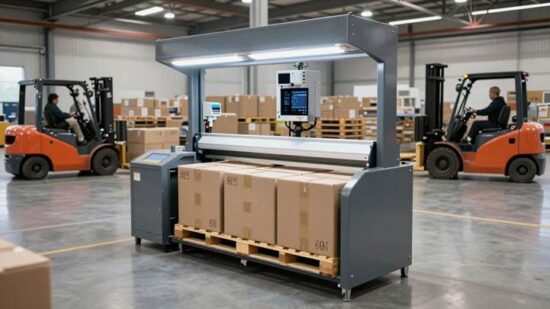
Getting a parcel dimensioner might seem like a big step, but it’s often more accessible than people think. Basic models can start around $3,000, while more automated systems might run up to $15,000. This cost covers the hardware and the software that captures the measurements. Think of it as an investment in accuracy.
These systems are designed to be relatively easy to install and integrate with existing shipping software. The upfront cost is a key factor for many businesses, and the range reflects different levels of automation and speed. A good parcel dimensioner pays for itself by reducing errors and speeding up the shipping process.
Initial Investment Considerations for Pallet Dimensioners
Pallet dimensioning systems represent a larger initial outlay. These systems can range from $20,000 to $60,000 or more, depending on the speed, capabilities, and how they integrate into your workflow. The hardware is more substantial, and installation might require more planning.
However, the value they bring, especially in terms of eliminating manual errors and optimizing freight costs, often justifies the higher price tag. Many companies find that the savings from accurate pallet dimensioning quickly outweigh the initial investment. It’s about getting the right data for larger shipments.
Calculating Return on Investment (ROI) for Dimensioning Systems
Calculating the ROI for a dimensioning system is pretty straightforward. You look at the money saved from avoiding carrier rebilling fees, which can add up fast. Then, consider the labor savings – less time spent on manual measurements means staff can do other tasks.
Here’s a quick look at potential savings:
- Reduced Carrier Disputes: Accurate data means fewer arguments over shipping charges.
- Labor Efficiency: Automating measurements frees up staff time.
- Optimized Shipping Costs: Better data leads to better carrier selection and fewer dimensional weight surprises.
The ROI for a shipping dimensioner typically falls between 3 to 12 months. This timeframe depends heavily on your daily shipping volume and how many errors you’re currently making. Businesses shipping over 50 parcels a day often see savings almost immediately.
Many vendors offer tools to help you estimate your specific ROI. They’ll ask about your shipping volume and current error rates to give you a clearer picture of the financial benefits. Investing in a dimensioner isn’t just an expense; it’s a strategic move to improve your bottom line.
Optimizing Operations with A Pallet and Parcel Dimensioner
Improving Throughput in High-Velocity Environments
In busy warehouses, speed matters. A pallet and parcel dimensioner system can really speed things up. For places that ship a lot of small packages, dimensioners can measure items as they move on conveyor belts. This means less stopping and starting, keeping things flowing smoothly. It’s all about getting more done in less time.
For larger items on pallets, things are a bit different. While you might not be able to measure them on a fast-moving belt, the right system still cuts down on delays. Think about systems that forklifts can use without stopping. This keeps the whole process moving, from receiving to shipping.
The goal is to reduce bottlenecks and keep your operation running at its best. This means less waiting around and more actual work getting done. A good dimensioning system makes a big difference here.
Enhancing Space Optimization Through Data Insights
Knowing the exact size of everything you ship is a goldmine for warehouse managers. This data from your pallet and parcel dimensioner helps you figure out the best way to store things. You can use it to decide which boxes fit best in which storage spots, or how to pack new orders more efficiently.
This isn’t just about making things look neat. It’s about making the most of the space you have. When you know the dimensions of your inventory and your outgoing shipments, you can reduce wasted space. This means you might not need as much storage area, or you can fit more into the space you already have.
Smart use of space means lower storage costs and quicker order fulfillment because items are easier to find.
Reducing Dimension Processing Costs and Errors
Manually measuring boxes and pallets takes time and is prone to mistakes. People get tired, they misread numbers, or they just guess. This leads to incorrect data, which can cause problems later on, like paying too much for shipping or sending out the wrong size box.
A pallet and parcel dimensioner automates this whole process. It measures accurately every time, and it does it much faster than a person can. This cuts down on the labor costs associated with measuring and also reduces the number of errors that slip through.
By using a dimensioner, you’re not just saving money on labor and avoiding shipping mistakes. You’re also freeing up your staff to do more important tasks. They can focus on packing orders carefully or managing inventory instead of tedious measuring.
Choosing The Right Dimensioning System For Your Operation
Volume and Throughput Considerations for System Selection
When picking a dimensioning system, think about how much stuff you actually move. If you’re swamped with small packages all day, a system built for that makes sense. These parcel dimensioners can often measure dozens of items a minute. They’re designed for speed and high volume.
On the flip side, if you’re dealing with big, bulky pallets, you need something different. Pallet dimensioners are built to handle those larger loads. They might not be as fast per item as a parcel system, but they’re essential for accurate freight data on bigger shipments.
The key is matching the technology to your actual needs. A fulfillment center shipping 1,000 parcels daily has vastly different requirements than a manufacturer shipping 50 pallets weekly. Your freight dimensioner should fit your operation, not force your operation to fit the technology.
Best-Fit Scenarios for Parcel Dimensioning Systems
Parcel dimensioners are great for e-commerce warehouses and distribution centers that handle a lot of small to medium-sized packages. Think about those benchtop units you see at packing stations. They’re quick and easy to use, giving operators fast measurements for shipping labels.
Mobile cart systems are also a good option here. They offer flexibility, letting you move the dimensioner to where it’s needed most. This is handy if you have multiple packing areas or need to scale up during busy seasons.
These systems are all about getting accurate dimensional weight data for smaller items, which helps avoid carrier surcharges and ensures correct billing. A good parcel dimensioner is a workhorse for high-velocity operations.
Best-Fit Scenarios for Pallet and Freight Dimensioning Systems
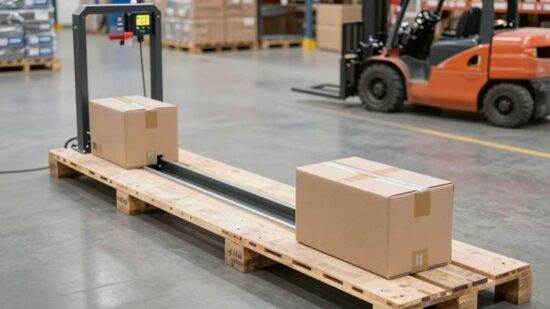
For operations that regularly ship full pallets or larger freight items, pallet dimensioners are the way to go. These systems are built tough and can handle the size and weight of palletized goods. Forklift-mounted systems are common, capturing measurements as part of the normal material handling process.
Floor portal systems act as checkpoints, measuring pallets as they pass through. These are useful for creating a clear measurement point in your workflow. Some systems even have Legal-for-Trade certification, which is important if you need measurements that carriers will accept for billing disputes.
Choosing the right freight dimensioner means looking at your specific cargo mix. Don’t try to force a parcel system to do a pallet job, or vice versa. Get a system that’s designed for the type of freight you move most often.
Putting It All Together
So, when you look at it, getting the right dimensioner for your warehouse really matters. Whether you’re dealing with a ton of small packages or big, bulky pallets, having a system that accurately measures them saves a lot of headaches and money. It’s not just about knowing the size; it’s about making sure your shipping costs are right, your warehouse space is used well, and your whole operation runs smoother. Picking the right tool, whether it’s a compact parcel unit or a heavy-duty pallet system, means better data, fewer mistakes, and ultimately, a more efficient business.